PVC C900 DR14 pipe gives water-system buyers a high-pressure, corrosion-resistant option, but its terminology can cause expensive specification mistakes. Buyers may confuse dimension ratio, pressure class, outside-diameter series, and certification scope. I recommend checking the applicable AWWA edition, dimensional tables, operating temperature, joint design, and supplier documents before approving an order.
PVC C900 DR14 pipe is an unplasticized PVC pressure pipe manufactured to the applicable AWWA C900 requirements with a dimension ratio of 14. Under recent editions, it is generally associated with a 305 psi pressure class at 73°F, or 23°C. It is commonly specified for potable water, reclaimed water, irrigation, force mains, and compatible industrial fluids.
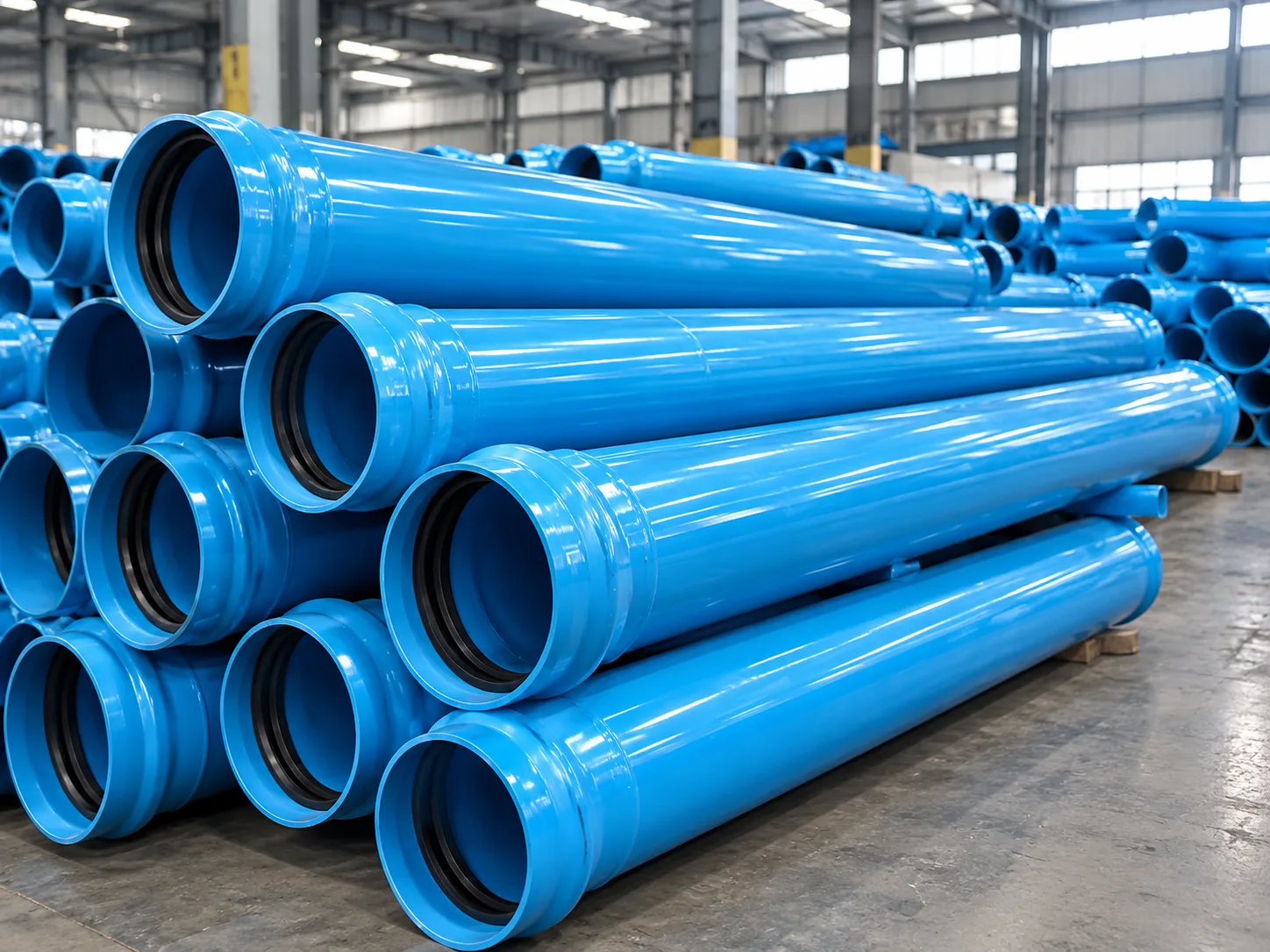
The headline values provide a useful starting point, but they do not complete a procurement specification. I also look at nominal size, outside-diameter series, surge conditions, temperature, joining method, fittings, valves, testing, and certification because each factor can affect system performance.
What Is PVC C900 DR14 Pipe?
A pipe description can look complete while still leaving important questions unanswered. If a buyer treats “C900,” “DR14,” and “305 psi” as interchangeable terms, the resulting purchase order may omit critical dimensional or compliance details. I separate these terms before comparing quotations.
PVC C900 DR14 pipe is a pressure pipe made from unplasticized polyvinyl chloride and produced according to an identified edition of AWWA C900. “DR14” describes the ratio between the pipe’s controlled outside diameter and minimum wall thickness. The lower DR creates a relatively thicker wall and supports a higher pressure class.
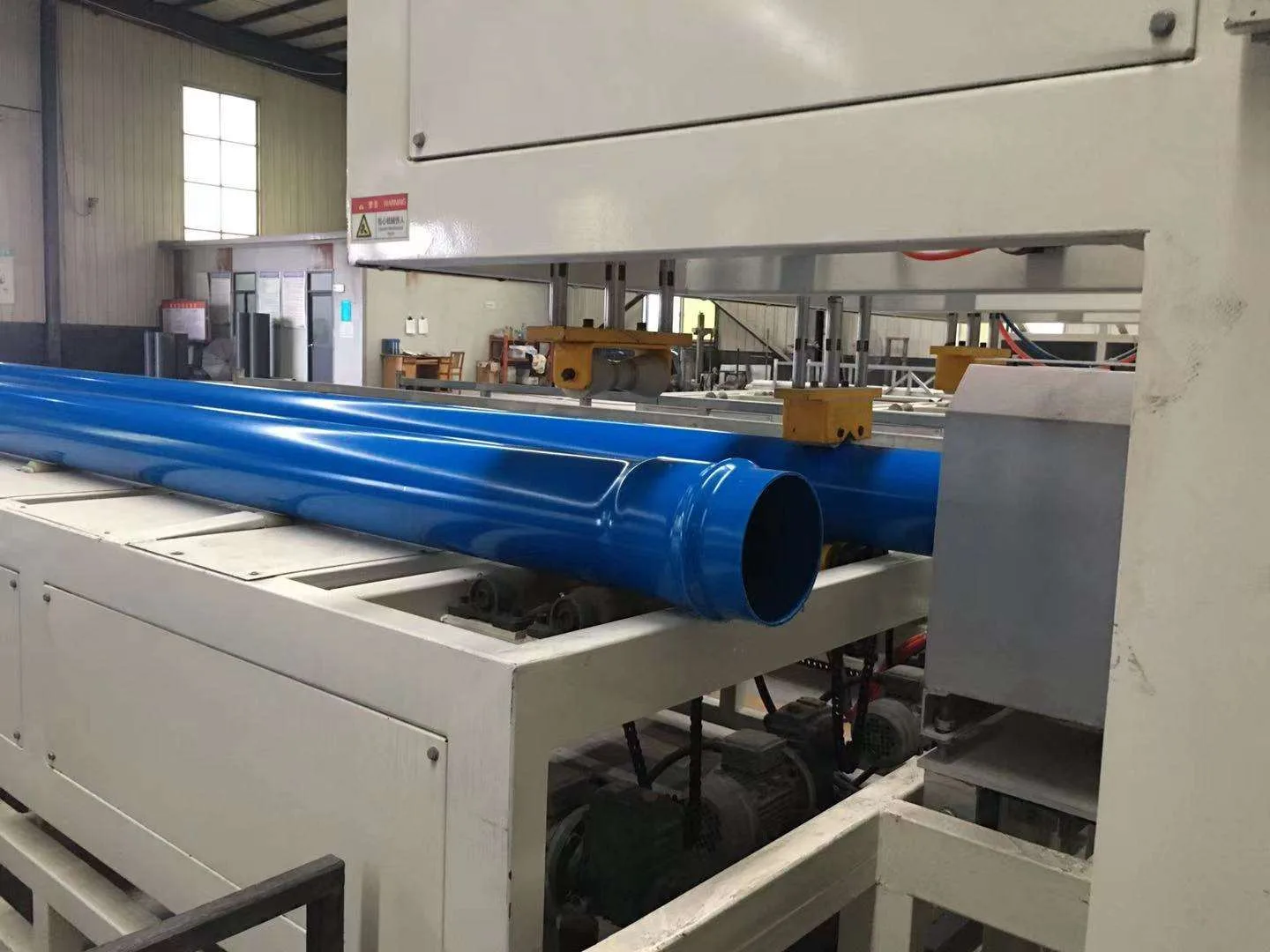
Understanding the three main terms
Each part of the product name communicates different information:
- PVC identifies the basic thermoplastic material.
- C900 identifies an American Water Works Association pressure-pipe standard.
- DR14 identifies a dimension ratio, not a nominal wall thickness.
- Diámetro nominal identifies the general system size, but it does not equal a measured outside diameter.
- Clase de presion identifies the standardized pressure category under specified reference conditions.
The dimension ratio is calculated as:
DR = controlled outside diameter ÷ minimum wall thickness
A DR14 pipe therefore has a minimum wall thickness based on approximately one-fourteenth of its controlled outside diameter. However, I do not recommend using this simple calculation as the final acceptance criterion. Standard tables include tolerances, minimum wall requirements, roundness limits, and other dimensional controls that a basic formula does not capture.
Which sizes and dimension ratios does C900 cover?
Recent AWWA C900 editions cover PVC pressure pipe and fabricated fittings in nominal sizes extending from 4 inches through 60 incheso aproximadamente 100 mm through 1,500 mm. Earlier editions had a narrower size scope, while larger pipe could be referenced under AWWA C905. That history is one reason I always request the standard edition on a quotation.
Depending on the edition, nominal size, and product configuration, available dimension ratios may include:
- DR14
- DR17
- DR18
- DR21
- DR25
- DR26
- DR27.5
- DR32.5
- DR41
- DR51
Not every manufacturer offers every DR in every nominal diameter. Tooling availability, production capacity, market demand, and certification scope can limit the practical range.
Why does the outside-diameter series matter?
AWWA C900 products may be specified using a cast-iron outside-diameter series, often called CIOD, or another outside-diameter system where allowed by the applicable standard and product specification. Buyers should never assume that two products with the same nominal size will connect directly.
I recommend placing the following information on the inquiry:
- Diámetro nominal
- Required outside-diameter series
- Relación de dimensión
- Clase de presion
- Edición estándar y
- Tipo de articulación
- Fluido previsto y temperatura de funcionamiento
- Required approvals or third-party documentation
This information helps a supplier identify compatible valves, fabricated fittings, adapters, couplings, and restraints.
What Are the Main PVC C900 DR14 Pipe Specifications?
The label “DR14” communicates only one part of the specification. A pipe can have the expected dimension ratio yet still fail to meet the required material, joint, marking, testing, or certification provisions. I use a structured data sheet rather than relying on a short product description.
Key PVC C900 DR14 pipe specifications normally include a DR of 14, a pressure class associated with the applicable AWWA C900 edition, standardized outside dimensions, gasketed or otherwise approved joints, defined PVC compound requirements, and permanent product markings. Buyers should verify actual values against the manufacturer’s current technical submittal.
Typical specification overview
The following table is a procurement guide rather than a substitute for the controlling standard.
| Elemento de especificación | Typical requirement or description | Lo que verifico |
|---|---|---|
| Producto estándar | AWWA C900 | Edition number and complete scope |
| Material | Unplasticized PVC pressure-pipe compound | Compound designation and supplier declaration |
| Relación de dimensión | DR14 | Minimum wall and measured outside diameter |
| Rango de tamaño nominal | Commonly within 4–60 inches under recent editions | Manufacturer’s available and certified range |
| Clase de presion | Commonly PC305 in recent C900 systems | Marking, edition, temperature basis, and data sheet |
| Temperatura de referencia | Generally 73°F or 23°C | Required derating at higher temperatures |
| Outside-diameter series | Según lo especificado por el proyecto | Compatibility with valves and fittings |
| Sistema articular | Frequently gasketed bell-and-spigot | Gasket material, insertion depth, and pressure suitability |
| Servicio previsto | Water and compatible fluids | Compatibilidad química y de temperatura |
| Marcado de producto | Standard, size, DR, pressure class, maker, and traceability data | Legibility and consistency with documents |
| Potable-water approval | Project- and market-specific | Current certificate and exact product scope |
| Pruebas | Standard production and qualification tests | Test method, frequency, records, and acceptance criteria |
Wall thickness and dimensional control
DR14 produces a thicker wall than higher ratios such as DR18, DR25, or DR41 when the outside diameter remains the same. This difference can improve pressure capability, but it may also reduce the internal flow area.
I check both hydraulic and mechanical effects:
- A thicker wall can reduce the inside diameter.
- A reduced inside diameter can increase fluid velocity at the same flow rate.1
- Higher velocity can increase friction loss and surge severity.
- The heavier pipe may affect handling and installation equipment.
- Compatible fittings may have different pressure classes from the pipe.
Theoretical wall thickness can be estimated by dividing the actual outside diameter by 14. However, nominal size is not the correct number to use in that calculation. The controlled outside diameter from the governing dimensional series must be used.
Joint and gasket requirements
Many C900 water pipelines use bell-and-spigot joints with elastomeric gaskets. Joint performance depends on more than pipe pressure class. The spigot dimensions, bell geometry, gasket compound, insertion depth, cleanliness, lubrication, and field alignment all matter.
For procurement, I ask for:
- Joint drawings
- Gasket material and applicable standard
- Información sobre resistencia química
- Maximum permissible angular deflection
- Instrucciones de instalación
- Pressure and vacuum limitations
- Joint qualification test information
- Restraint recommendations where thrust forces occur
A gasket suitable for clean water may not be suitable for every reclaimed-water or chemical service. A qualified engineer should review the entire joint system for the actual fluid and operating conditions.
What Is the PVC C900 DR14 Pipe Pressure Rating?
Pressure terminology creates some of the most serious purchasing errors. A listed pressure class does not mean that a pipeline can operate at that pressure under every temperature, surge, burial, or chemical condition. I treat pressure class as one design input rather than a universal working limit.
Under recent AWWA C900 classifications, PVC C900 DR14 pipe is commonly designated Pressure Class 305, meaning 305 psi at the standard reference temperature of 73°F or 23°C.2 That equals approximately 2.10 MPa or 21 bar. Engineers must still evaluate temperature derating, surge pressure, fittings, joints, and project safety requirements.
How does DR relate to pressure class?
A lower dimension ratio means a thicker pipe wall relative to outside diameter.3 This relationship generally produces a higher pressure capability when the material and reference conditions remain the same.
The following values show common pressure-class associations found in recent C900 product literature. The governing standard edition and manufacturer’s markings must control the final selection.
| Relación de dimensión | Common pressure class | Equivalente métrico aproximado |
|---|---|---|
| DR14 | 305 psi | 2.10 MPa |
| DR17 | 250 psi | 1.72 MPa |
| DR18 | 235 psi | 1.62 MPa |
| DR21 | 200 psi | 1.38 MPa |
| DR25 | 165 psi | 1.14 MPa |
| DR26 | 160 psi | 1.10 MPa |
| DR27.5 | 150 psi | 1.03 MPa |
| DR32.5 | 125 psi | 0.86 MPa |
| DR41 | 100 psi | 0.69 MPa |
| DR51 | 80 psi | 0.55 MPa |
Historical documents can show different classifications, so a buyer should not copy an old DR14 pressure value into a current specification without checking the referenced edition. I have found that this simple edition check often resolves apparent conflicts between quotations.
¿Por qué importa la temperatura?
PVC pressure classes are generally stated at 73 ° F o 23 ° C. As operating temperature rises, the allowable pressure normally decreases. A pipe carrying warm industrial water may therefore require a lower allowable working pressure than the marked pressure class suggests.
Manufacturers usually publish temperature correction factors. I recommend that buyers request the exact table for the proposed product rather than applying a generic factor found online. The designer should consider:
- Temperatura de funcionamiento normal
- Short-duration temperature peaks
- Ambient and soil temperature
- Solar heating before burial
- Start-up and cleaning conditions
- Temperature of chemical solutions
- Combined temperature and pressure cycles
PVC also becomes more vulnerable to impact in cold conditions.4 Cold-weather handling procedures can therefore matter even when the internal pressure calculation remains acceptable.
How should surge pressure be evaluated?
Pump starts, pump stops, rapid valve closure, check-valve slam, and sudden flow changes can create transient pressure. These events can raise pressure above the steady operating value.
A surge analysis should consider:
- Pipeline length and profile
- Velocidad de flujo
- Pipe wave speed
- Características de la bomba
- Valve closing time
- Air-valve location
- Check-valve response
- Surge tanks or pressure-relief devices
- Recurring versus occasional transient events
The exact treatment of surge depends on the standard edition and engineering design method. I avoid assuming that every transient is automatically covered by the marked pressure class. A qualified hydraulic engineer should confirm the allowable combination of static pressure and surge.
The system pressure is also limited by its weakest component. A 305 psi pipe does not create a 305 psi system when a valve, flange, coupling, fabricated fitting, gasket, or restraint has a lower allowable pressure.
Where Is PVC C900 DR14 Pipe Commonly Used?
A high-pressure class can make DR14 attractive, but pressure alone does not determine suitability. Soil conditions, water quality, temperature, disinfection chemicals, installation methods, and component compatibility can be equally important. I first define the application and then compare the available piping systems.
PVC C900 DR14 pipe is commonly considered for potable-water transmission and distribution, reclaimed-water networks, agricultural irrigation mains, wastewater force mains, and compatible industrial fluid systems. Its corrosion resistance and high pressure class are valuable, but each project requires verification of chemical compatibility, temperature limits, joint design, and regulatory approval.
Potable-water distribution
C900 pipe is widely associated with municipal water infrastructure. PVC does not rust like unprotected ferrous pipe, which can reduce concerns about internal tuberculation and external electrochemical corrosion.
However, a reference to AWWA C900 does not automatically prove potable-water approval in every country or project.5 I request a current certificate from the required certification body and verify:
- Nombre del Fabricante
- Lugar de producción
- Familia de productos
- Rango de tamaño
- Clase de presion
- Formulación de materiales
- Número certificado
- Fechas de emisión y vencimiento
Reclaimed water and irrigation
DR14 can suit irrigation transmission lines where pump discharge pressure, terrain elevation, or surge conditions exceed the capability of lower-pressure pipe. Reclaimed-water projects may also use C900 products when local specifications permit them.
Designers should still review:
- Fertilizer and treatment-chemical compatibility
- Maximum pump shutoff pressure
- Pressure changes between elevation zones
- Air-release and vacuum-protection requirements
- Velocidad de funcionamiento de la válvula
- Identification requirements for reclaimed water
- Seasonal temperature and UV exposure
In our plastic valve and fitting work, I often see buyers focus heavily on the pipe while treating valves as accessories. I recommend the opposite approach: the pipe, valve, fitting, flange, gasket, and actuator should be evaluated as one pressure system.
Wastewater force mains
PVC C900 DR14 pipe may be considered for pressurized wastewater where the fluid is compatible with unplasticized PVC and the gasket material. Wastewater force mains can experience gas accumulation, cyclic pump operation, vacuum events, and aggressive surge conditions.
The designer should evaluate the wastewater composition rather than relying on the word “wastewater.” Industrial discharge can contain solvents, oils, or chemicals that behave differently from ordinary municipal sewage.
Transferencia de fluidos industriales
Certain compatible chemicals can be transported through PVC systems, but broad claims such as “chemical resistant” are not enough for engineering approval. Compatibility depends on:
- Identidad química
- Concentración
- Temperatura
- Presión
- Duración de la exposición
- Mixtures and contaminants
- compuesto para juntas
- Productos químicos de limpieza
- Frequency of pressure cycling
I recommend obtaining written compatibility data from the pipe, valve, fitting, and gasket suppliers. A qualified materials engineer should review critical chemical applications, especially when failure could expose workers or the environment.
How Should Buyers Evaluate PVC C900 DR14 Pipe and Suppliers?
A low unit price can become expensive when the pipe arrives with incompatible dimensions, incomplete certificates, weak traceability, or inconsistent joints. International buyers face additional risks because a rejected shipment can delay an entire project. I use a document-based supplier qualification process before approving mass production.
Buyers should evaluate PVC C900 DR14 pipe suppliers by reviewing standard compliance, material control, dimensional records, pressure testing, joint qualification, traceability, production capacity, certificates, and packaging. A sample approval or factory audit can provide more assurance than a quotation alone, especially for large municipal or industrial orders.
Build a complete purchase specification
A useful request for quotation should state more than size and quantity. I include the following items:
- AWWA C900 edition
- Nominal size and outside-diameter series
- DR14 and required pressure class
- Pipe length and permitted tolerance
- Bell-and-spigot or alternative joint type
- Material de la junta
- Fluid and design temperature
- Working, test, and surge pressures
- Required marking and color
- Potable-water approval, if applicable
- Requisitos de inspección y prueba
- Packaging and container-loading method
- Required spare gaskets
- Compatible fittings, valves, and adapters
- Document language and submission schedule
Revisar los controles de calidad de fabricación.
A supplier should be able to explain how it controls raw material, extrusion conditions, dimensions, socket formation, hydrostatic performance, and traceability. The exact inspection plan should match the applicable standard and contract.
Los registros útiles pueden incluir:
- Raw-material certificates
- Inspección de material entrante
- Batch and lot identification
- Outside-diameter measurements
- Minimum wall-thickness results
- Pipe-length records
- Socket and spigot dimensions
- Informes de pruebas hidrostáticas
- Joint-performance records
- Criterios de inspección visual
- Certificados de calibración
- Nonconformance procedures
For valves and fittings used with the line, I also prioritize Prueba de presión al 100%, virgin material control, and dimensional compatibility. Our manufacturing context includes more than 15 years of plastic valve and fitting production, over 100 injection molding machines, and OEM or ODM capabilities. Buyers should still verify that any SGS or BV report, CE documentation, REACH declaration, or ISO 9001 certificate applies to the named company, site, process, and product being purchased.
ISO 9001 certifies a quality management system. It does not, by itself, certify that a specific pipe, valve, or fitting complies with AWWA C900 or a potable-water requirement.
Check system compatibility before shipment
The pipe may meet its dimensional table while a connected valve follows DIN, ANSI, BS, or JIS dimensions. This mismatch is especially important in international projects.
I recommend creating an interface schedule that identifies:
| Fácil de usar | Verificación requerida |
|---|---|
| Pipe to fitting | Outside diameter, insertion depth, and pressure class |
| Pipe to valve | End connection, bore, pressure rating, and restraint |
| PVC to metal pipe | Transition coupling and differential movement |
| Conexión bridada | Flange standard, drilling, gasket, and bolt torque |
| Buried valve | Thrust control, support, access, and operating extension |
| Fabricated fitting | Design pressure, reinforcement, and test documentation |
A pre-shipment inspection should compare product markings with the approved submittal. It should also check quantities, gasket packaging, end protection, pipe support, and container-loading methods. Large-diameter PVC products need careful support to prevent deformation or impact damage during transport.
Preguntas frecuentes
Is PVC C900 DR14 pipe always rated for 305 psi?
Recent AWWA C900 classifications commonly associate DR14 with Pressure Class 305 at 73°F or 23°C. However, buyers should confirm the standard edition, manufacturer’s marking, technical data sheet, operating temperature, and surge criteria. Older specifications or non-C900 products may show different values.
What is the difference between DR14 and DR18 PVC pipe?
DR14 has a thicker wall relative to its outside diameter than DR18. It therefore generally provides a higher pressure class but a smaller internal flow area for the same outside diameter. Under recent C900 classifications, DR14 is commonly PC305, while DR18 is commonly PC235.
Can PVC C900 DR14 pipe carry drinking water?
It can be used in potable-water systems when the product meets the project standard and holds the required potable-water approval. Buyers should verify a current certificate for the exact manufacturer, production facility, material formulation, size range, and product rather than relying only on an AWWA C900 statement.
Can C900 DR14 pipe connect directly to any plastic valve?
No. The valve and pipe must have compatible outside dimensions, ends, pressure ratings, gaskets, and restraints. A valve produced to DIN, ANSI, BS, or JIS dimensions may require an adapter. I recommend approving an interface drawing before ordering the complete system.
Is DR14 necessary for every high-pressure water project?
No. DR14 may be appropriate when the required working pressure, surge allowance, temperature, and project safety criteria justify its pressure class. A lower pressure class may be adequate and more economical in other systems. A qualified engineer should perform hydraulic and structural evaluations before selection.
Conclusion: Selecting PVC C900 DR14 Pipe
PVC C900 DR14 pipe combines a relatively thick wall with a pressure class commonly identified as 305 psi under recent AWWA C900 editions. Buyers should still verify dimensions, temperature derating, surge conditions, joint design, chemical compatibility, and certificate scope. The full system must also match the pressure capability of its valves, fittings, gaskets, and restraints. Contact us to discuss compatible corrosion-resistant plastic valves, standard pipe fittings, pressure-tested components, and OEM or ODM solutions for your C900 water, wastewater, or irrigation project.
"Volumetric Flowrate, Velocity and the Continuity Equation", https://ecommons.udayton.edu/cgi/viewcontent.cgi?article=1004&context=cee_coursenotes. For steady incompressible flow, the continuity relation Q = Av shows that mean velocity rises as internal cross-sectional area decreases when volumetric flow rate is unchanged. Evidence role: mechanism; source type: education. Supports: The continuity-equation relationship among volumetric flow, cross-sectional area, and mean velocity.. Scope note: This relationship assumes the same flow rate and does not by itself quantify friction loss or transient pressure. ↩
"Blue Brute C900", https://www.jmeagle.com/sites/default/files/JM%20Eagle_Blue%20Brute%20C900_onesheet_rev21.pdf. Recent editions of AWWA C900 classify DR14 PVC pressure pipe as Pressure Class 305 at the standard reference temperature of 73°F (23°C). Evidence role: statistic; source type: institution. Supports: The standardized association between DR14, Pressure Class 305, and the 73°F reference temperature in recent C900 classifications.. Scope note: The classification is edition-specific and does not by itself establish the allowable operating pressure at other temperatures or under all surge conditions. ↩
"pipeline size and volume", https://www.dph.ncdhhs.gov/media/1858/open. Dimension ratio is defined as the controlled outside diameter divided by the minimum wall thickness; consequently, a lower DR denotes a thicker minimum wall when outside diameter is held constant. Evidence role: mechanism; source type: education. Supports: The inverse relationship between dimension ratio and wall thickness at a fixed outside diameter.. ↩
"(PDF) The ductile-brittle transition of low-density polyethylene", https://www.academia.edu/29618037/The_ductile_brittle_transition_of_low_density_polyethylene. Experimental studies of rigid PVC report reduced impact toughness and a greater tendency toward brittle response as temperature declines. Evidence role: mechanism; source type: paper. Supports: The effect of low temperature on the impact behavior and ductile-to-brittle response of rigid PVC.. Scope note: Laboratory impact results vary with formulation, specimen geometry, loading rate, prior damage, and the temperature range tested. ↩
"Using Standards to Improve Water Quality | US EPA", https://www.epa.gov/vcs/using-standards-improve-water-quality. Potable-water regulations and certification frameworks may require health-effects evaluation of drinking-water components in addition to compliance with a dimensional and performance standard such as AWWA C900. Evidence role: general_support; source type: government. Supports: The existence of separate health-effects or jurisdictional requirements for materials and components that contact drinking water.. Scope note: Approval requirements differ by jurisdiction, project authority, product formulation, manufacturing location, and intended use. ↩