HDPE electrofusion pipe fitting welding can produce strong, leak-resistant joints, but small preparation errors can undermine the entire pipeline. An unremoved oxide layer, incorrect voltage, or early handling may create defects that remain hidden until pressure testing or service. I use a controlled process to reduce these risks and make joint quality more repeatable.
HDPE electrofusion pipe fitting welding uses electrical resistance wires embedded inside a fitting to generate controlled heat.1 This heat melts the prepared pipe surface and the fitting bore. After an uninterrupted cooling period, the materials fuse into a permanent joint. Successful welding requires clean scraping, correct alignment, compatible equipment, verified parameters, and documented cooling.
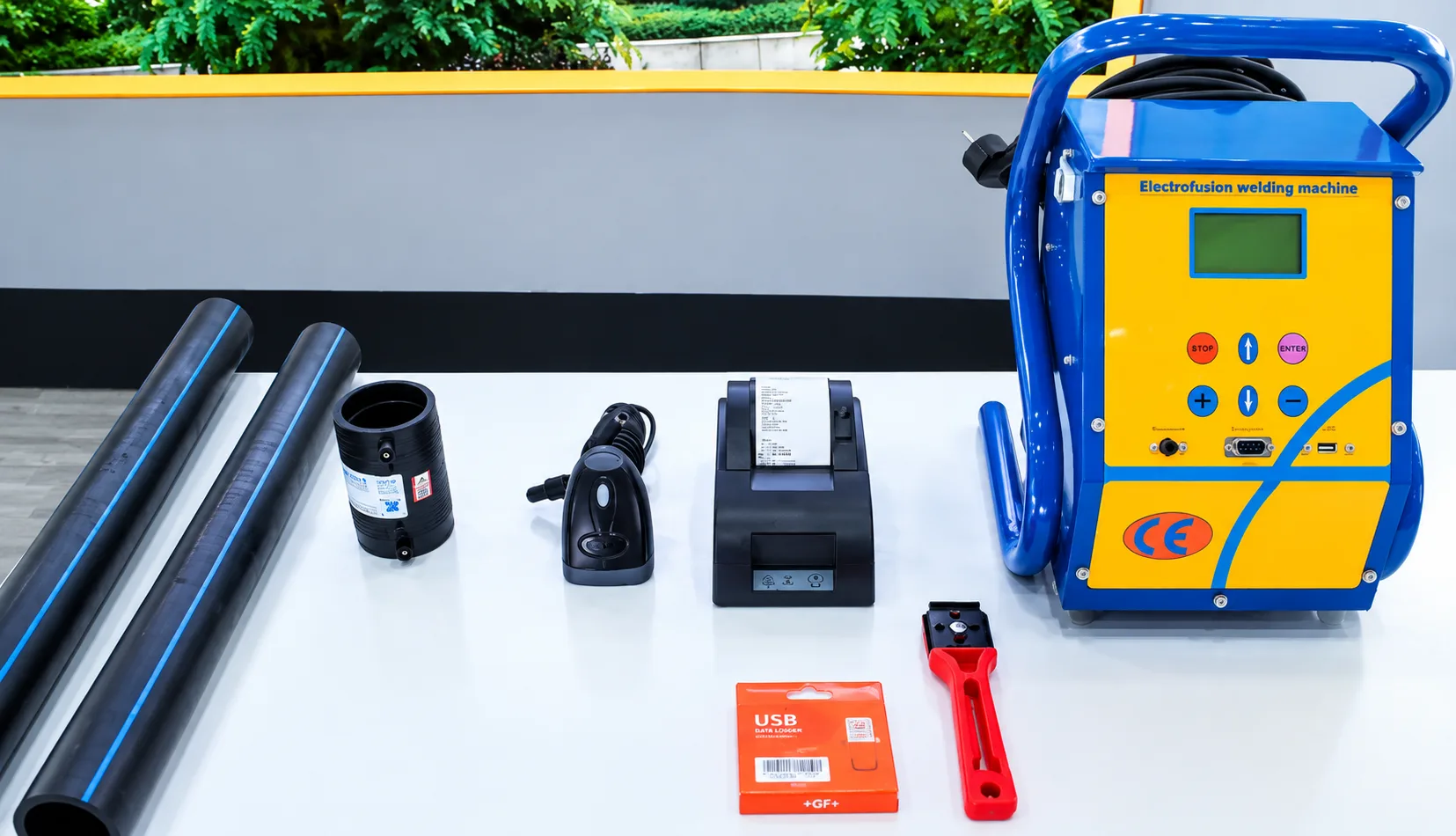
The basic principle is simple, but reliable field execution requires more than connecting two welding leads. I recommend that buyers, contractors, and quality teams evaluate every stage—from fitting storage and pipe preparation to machine records and final pressure testing.
How Does the HDPE Electrofusion Pipe Fitting Welding Process Work?
The main risk in HDPE electrofusion pipe fitting welding is that the completed connection can look acceptable even when surface preparation or heat input was inadequate. This uncertainty becomes more serious in buried water, gas, drainage, and chemical-service pipelines, where repairing a failed joint can be expensive and disruptive.
HDPE electrofusion welding works by passing electrical current through resistance wire molded into an electrofusion coupler, elbow, tee, or saddle. The resulting Joule heat softens the fitting bore and pipe surface. Controlled melt expansion creates fusion pressure. The joint then gains strength during the manufacturer-specified cooling period.
The seven-stage welding sequence
I generally divide the procedure into seven controlled stages:
- Verify compatibility
- Cut and prepare the pipe
- Measure and scrape the fusion zone
- Clean the prepared surfaces
- Align and clamp the assembly
- Run the specified fusion cycle
- Cool, inspect, and document the joint
Each stage affects the next one. A modern electrofusion control unit cannot compensate for dirty pipe, poor alignment, or an oxide layer left on the fusion surface.
1. Verify the pipe, fitting, and application
I first check that the pipe and fitting are compatible in:
- Outside diameter
- Standard dimension ratio, or SDR
- Polyethylene material designation
- Pressure class
- Intended fluid and operating temperature
- Applicable project standard
- Fitting manufacturer’s permitted pipe range
For example, a fitting may accept more than one SDR, but I never assume compatibility based only on nominal diameter. I review the fitting label, barcode, technical data sheet, and project specification.
For gas, potable water, hazardous chemicals, or regulated infrastructure, I recommend approval by a qualified pipeline engineer and installation by trained personnel. Local codes can impose requirements beyond the fitting manufacturer’s instructions.
2. Cut the pipe square
I use a suitable plastic pipe cutter or guided saw to produce a square, flat end. An angled or damaged end may prevent full insertion and create an uneven fusion zone.
I also inspect the pipe for:
- Deep scratches or gouges
- Ovality
- Flattened ends
- Embedded contamination
- Weathering or UV damage
- Excessive bending stress
A pipe re-rounding tool may be necessary when ovality exceeds the fitting manufacturer’s limit. I avoid forcing an out-of-round pipe into the fitting because this can produce uneven contact around the circumference.
3. Mark and scrape the fusion area
Polyethylene develops a thin oxidized surface during storage and exposure.2 I remove this layer with a purpose-built rotary or manual scraping tool. I mark the insertion depth before scraping, then remove a continuous and uniform layer over the complete fusion zone.
I do not treat sanding as a substitute for controlled scraping. Abrasive paper may leave grit behind, produce an inconsistent surface, or merely polish contamination into the pipe.
4. Clean without recontamination
After scraping, I keep hands, gloves, oil, moisture, and dust away from the prepared area. When the fitting manufacturer permits solvent cleaning, I use approved lint-free wipes and the specified cleaning agent. I let the surface dry completely before assembly.
I have seen crews complete careful scraping and then touch the prepared pipe while aligning it. That small habit can undo much of the earlier work.
5. Clamp and align
I insert both pipe ends to the marked depth and secure them with an alignment clamp. Equal-size ends should remain concentric, and pipe ends should not introduce bending or pull-out force.
6. Complete the fusion cycle
I connect the control unit terminals, scan the barcode or enter the approved parameters, and confirm the displayed fitting details before starting. I do not manually alter voltage or time unless the fitting manufacturer provides a documented procedure.
7. Allow complete cooling
The assembly remains clamped and undisturbed for the full cooling period. I distinguish between:
- Clamp removal time
- Handling time
- Pressure test time
- Return-to-service time
These periods may differ. The fitting manufacturer and project procedure should define each one.
What Equipment Does HDPE Electrofusion Pipe Fitting Welding Require?
Poor equipment selection can turn a controlled fusion method into an inconsistent one. A control unit may supply unstable power, a scraper may leave oxidation behind, or a missing clamp may allow movement during heating. I therefore evaluate the complete tooling package rather than focusing only on the welding machine.
A complete HDPE electrofusion pipe fitting welding setup normally includes a compatible electrofusion control unit, generator or stable power source, pipe cutter, measuring tools, pipe scraper, alignment clamps, re-rounding tools, approved cleaning materials, and inspection equipment. Data logging and barcode scanning improve parameter control and traceability.
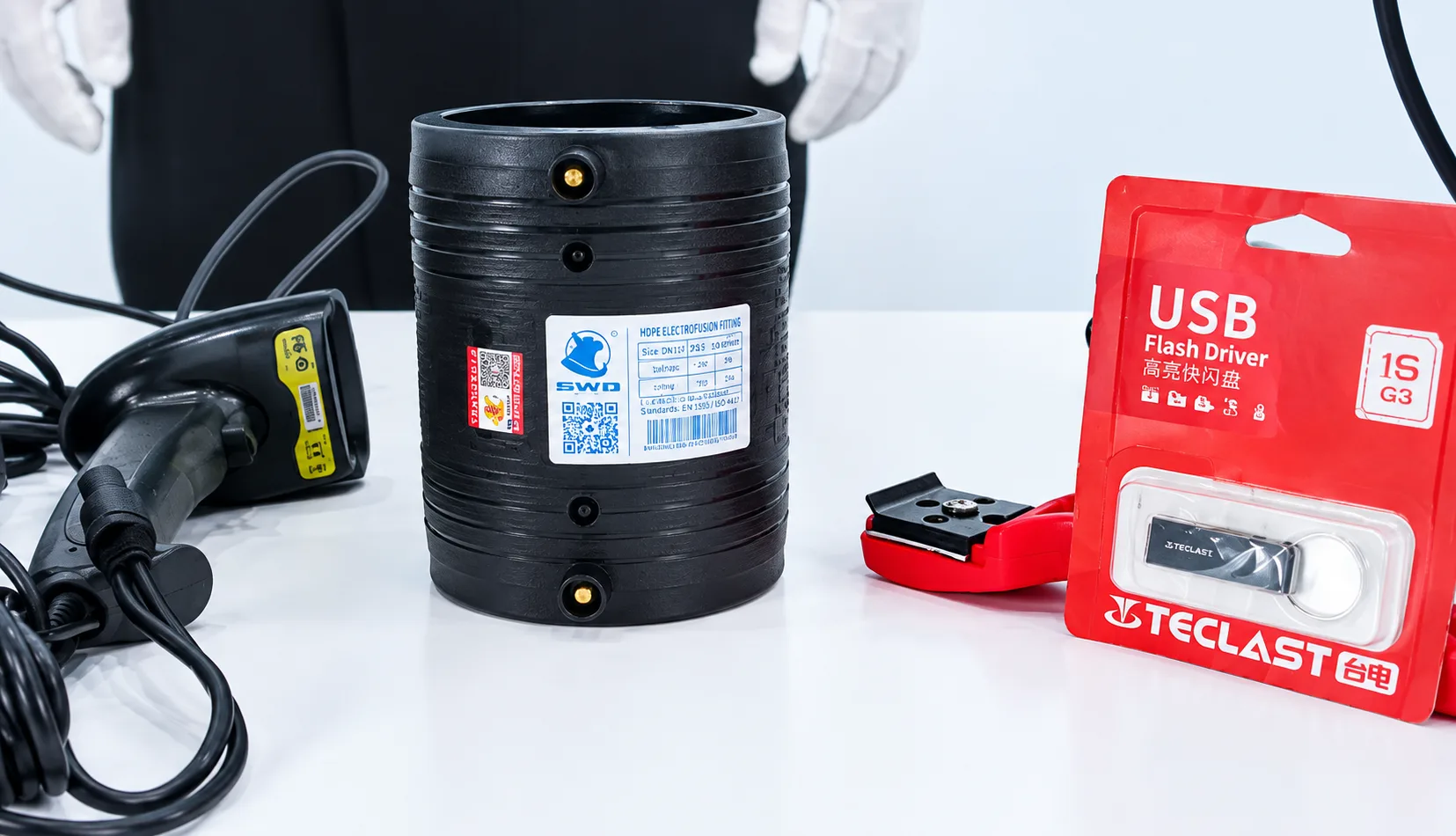
Essential equipment checklist
| Equipment | Main purpose | Procurement check |
|---|---|---|
| Electrofusion control unit | Supplies controlled current and records the cycle | Confirm voltage range, fitting compatibility, calibration, leads, and data output |
| Barcode scanner | Loads fitting-specific parameters | Confirm support for the barcode format used by the fitting supplier |
| Generator or mains supply | Provides stable input power | Check rated output, grounding, voltage stability, and extension cable limits |
| Pipe cutter or guided saw | Produces a square pipe end | Confirm size capacity and blade condition |
| Rotary or manual scraper | Removes the oxidized surface layer | Check scraping range, blade condition, and layer consistency |
| Alignment clamp | Holds pipes concentric and motionless | Confirm diameter range and configuration |
| Re-rounding tool | Corrects pipe ovality | Confirm pipe size and permitted adjustment |
| Tape and permanent marker | Marks insertion depth and fusion zone | Use markers that do not contaminate the surface |
| Approved wipes and cleaner | Removes permitted surface contamination | Follow fitting instructions and site safety rules |
| Temperature measuring device | Records ambient and pipe conditions | Use a suitable calibrated instrument |
| Data logger or printer | Preserves fusion records | Confirm file format, memory capacity, and project traceability needs |
Control unit compatibility matters
Electrofusion fittings do not all use the same welding voltage or cycle time. Many systems use barcode-controlled parameters, while some fittings provide manual settings on the label. A displayed value such as voltage, resistance, or fusion time is fitting-specific, not a universal rule for HDPE.
I check the following before procurement:
- Supported output voltage and current
- Fitting diameter and power range
- Barcode reading capability
- Automatic temperature compensation
- Resistance measurement and error detection
- Fusion record storage
- Operator ID and project ID functions
- USB, Bluetooth, or cloud data export
- Calibration status and service support
- Lead connector compatibility
ISO 12176-2 is commonly referenced for electrofusion control units3, while other standards may apply to the pipe, fitting, installation, or project. I treat standard markings and certificates as documents to verify, not as substitutes for product testing or technical review.
Power supply and extension cables
A generator must provide enough stable output for the control unit and fitting. An undersized generator or an excessively long extension cable can create voltage drop and interrupt the fusion cycle.
I review:
- The control unit manufacturer’s generator recommendation.
- The maximum permitted extension cable length.
- The required cable conductor size.
- Grounding and electrical protection.
- Other equipment connected to the same generator.
- Generator behavior under changing electrical load.
I do not restart a failed cycle automatically. Some fittings may not be safely re-fused after an interruption. I quarantine the joint and follow the fitting manufacturer’s written instructions.
Video placement: Embed a short demonstration here showing pipe cutting, insertion-depth marking, rotary scraping, cleaning, clamping, barcode scanning, fusion, and the full cooling period.
Which HDPE Electrofusion Pipe Fitting Welding Best Practices Prevent Failures?
Most electrofusion problems do not come from a complicated scientific principle. They come from skipped steps, uncontrolled conditions, or incorrect assumptions. I often focus quality reviews on the simple actions that operators may rush when schedules are tight.
The most effective HDPE electrofusion pipe fitting welding practices are complete oxide-layer removal, dry and contamination-free surfaces, accurate insertion depth, concentric alignment, stable power, verified fusion parameters, and full cooling. I also require traceable records because visual indicators alone cannot confirm complete molecular fusion.
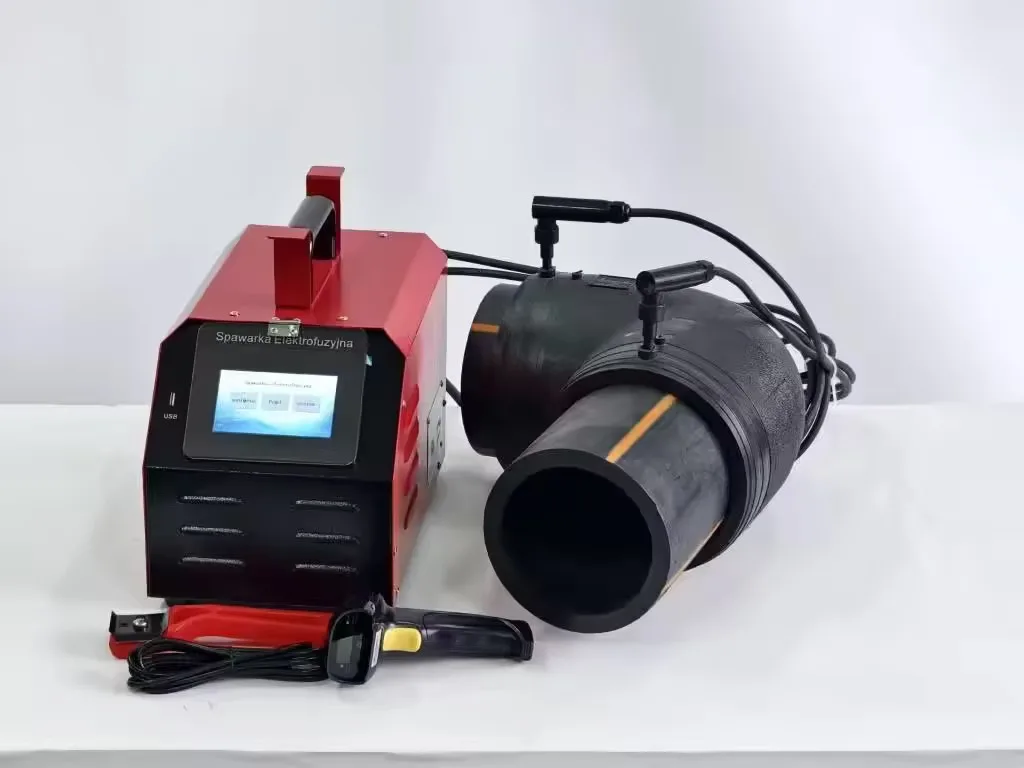
Common mistakes and their consequences
| Common mistake | Possible consequence | Preventive action |
|---|---|---|
| Oxide layer is not removed | Weak or incomplete fusion | Scrape the full fusion zone uniformly |
| Pipe is scraped unevenly | Irregular melt contact | Use a maintained, size-appropriate scraper |
| Scraped surface is touched | Oil or dirt contamination | Keep prepared surfaces protected |
| Pipe is wet | Voids, steam effects, or poor bonding | Dry the pipe and shelter the work area |
| Pipe is not fully inserted | Reduced effective fusion area | Mark and verify insertion depth |
| Ends are misaligned | Uneven fusion pressure and stress | Use alignment and re-rounding tools |
| Wrong voltage or time is entered | Cold fusion or overheating | Scan and confirm fitting parameters |
| Assembly moves during fusion | Disturbed melt interface | Keep the clamp installed through cooling |
| Cooling time is shortened | Joint deformation or reduced strength | Follow the specified cooling schedule |
| Pressure testing begins early | Joint damage or misleading results | Use the approved test procedure and timing |
Control the work environment
Rain, condensation, windblown dust, mud, and extreme temperature can affect the procedure. I use a clean shelter when welding outdoors. The shelter should control contamination without creating unsafe ventilation or electrical conditions.
I also check whether the control unit applies automatic temperature compensation. A machine may adjust the fusion time based on ambient temperature, but I still verify that the fitting and pipe are within their permitted installation range.
When pipe has been stored in direct sunlight, its surface temperature can differ significantly from the surrounding air. I measure the actual working conditions rather than relying only on a weather report.
Keep components free from stress
The fitting should not function as a device for pulling misaligned pipes together. I support long pipe sections so that their weight does not load the joint. I also account for:
- Pipe curvature from coils
- Trench wall pressure
- Uneven bedding
- Thermal expansion
- Equipment vibration
- Wind movement on exposed pipe
- Pull from valves or other components
For connections near valves, flanges, or rigid equipment, I review the layout carefully. Plastic piping can tolerate movement, but the electrofusion joint should remain stable during heating and cooling.
Do not use melt indicators as the only acceptance test
Many electrofusion fittings include indicator pins that rise during the heating cycle. These indicators can show that melt movement occurred in a local area. However, they do not prove that the entire circumference received proper preparation and fusion.
I use them as one inspection point among several. I still review machine error codes, fusion records, alignment, insertion marks, cooling time, and surface condition.
Protect traceability
A useful weld record can include:
- Project and location
- Joint number
- Date and time
- Operator identification
- Pipe and fitting manufacturer
- Fitting batch number
- Diameter and SDR
- Barcode or fusion parameters
- Ambient and pipe temperature
- Control unit serial number
- Calibration status
- Fusion result or error code
- Cooling start and finish times
- Inspector approval
These records help contractors investigate problems and demonstrate that an approved process was followed. They also help buyers compare installation performance across fitting batches and work crews.
How Should Buyers Inspect HDPE Electrofusion Pipe Fitting Welding Quality?
Visual inspection can identify obvious defects, but it cannot reveal every internal fusion problem. This limitation can create false confidence, especially when a joint looks clean from the outside. I therefore combine visual checks with process records, dimensional controls, and project-approved testing.
Buyers should inspect HDPE electrofusion pipe fitting welding by checking alignment, full insertion, fitting condition, melt indicators, error-free machine records, cooling compliance, and joint traceability. They should then use the specified pressure or leak test. Destructive qualification tests may also be required for procedures, operators, or production samples.
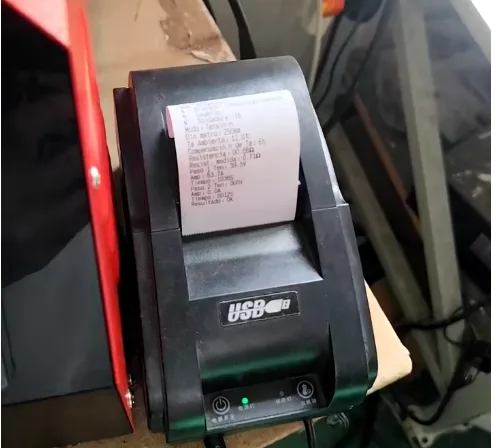
Visual inspection points
I inspect the completed assembly for:
- Concentric pipe alignment
- Flat and properly positioned pipe ends
- No visible movement from the original insertion marks
- No exposed resistance wire
- No burned or severely deformed material
- No excessive melt extrusion
- No cracked or damaged fitting body
- No obvious cold-fusion signs
- Proper indicator position, where applicable
- A documented, error-free machine cycle
An unusual appearance does not always establish the root cause. I isolate questionable joints and consult the fitting supplier or qualified engineer rather than making a field judgment based on appearance alone.
Process inspection versus final inspection
I prefer process controls because some critical defects become invisible after assembly.
| Inspection stage | What I verify | Why it matters |
|---|---|---|
| Incoming inspection | Labels, batch, dimensions, packaging, storage condition | Prevents use of damaged or incorrect fittings |
| Before scraping | Pipe condition, ovality, squareness | Establishes whether the pipe can be prepared correctly |
| After scraping | Complete and uniform material removal | Confirms removal of the oxidized layer |
| Before fusion | Cleanliness, dryness, insertion depth, clamping | Prevents hidden preparation defects |
| During fusion | Correct parameters, stable power, no movement | Controls heat input and melt stability |
| During cooling | Clamp retention and no disturbance | Protects the developing joint |
| Final inspection | Appearance, records, identification | Supports acceptance and traceability |
| System testing | Leak and pressure performance | Evaluates the installed pipeline under an approved procedure |
Pressure and leak testing
The project specification should define the testing medium, pressure, duration, stabilization period, safety zone, and acceptance criteria. Polyethylene pipe expands under pressure, so testing procedures designed for rigid metal pipe may produce misleading results.4
I follow the applicable pipe system standard and the engineer-approved test plan. I also confirm that all fittings, plastic valves, flanges, restraints, and temporary closures have suitable pressure ratings.
Pneumatic testing stores much more energy than hydrostatic testing and can present severe hazards. I recommend qualified professional supervision whenever compressed gas is considered.
Supplier evaluation for electrofusion components
I ask potential suppliers for evidence that can be verified. A practical evaluation package may include:
- Product drawings and tolerances
- Raw material identification
- Batch traceability
- Dimensional inspection records
- Pressure or performance test reports
- Applicable standard declarations
- Third-party test reports
- Quality management certificates
- Installation instructions
- Storage requirements
- Warranty terms
- Nonconformance and corrective-action procedures
Certificates such as ISO 9001 or product-related test reports can support a supplier review. However, I verify certificate numbers, issuing bodies, validity dates, covered factory locations, and product scope. A quality management certificate alone does not establish that a specific fitting is suitable for a particular pressure, chemical, or regulatory application.5
In our broader plastic valve and piping product context, I place strong emphasis on virgin material control, repeatable molding, pressure testing, batch management, and OEM traceability. Buyers should still confirm the exact tests and certifications that apply to the specific HDPE electrofusion product under consideration.
Frequently Asked Questions
Do I need to scrape new HDPE pipe before electrofusion welding?
Yes. I scrape new HDPE pipe because even a clean-looking surface can have an oxidized layer that interferes with molecular fusion. I remove a thin, continuous layer across the entire fusion zone using an approved scraping tool. I follow the fitting manufacturer’s instructions for scraping depth and coverage.
Can I sand HDPE pipe instead of using a scraper?
I do not recommend ordinary sanding as a replacement for mechanical scraping. Sandpaper can produce uneven preparation, leave abrasive particles, and spread contamination. A purpose-built rotary or manual scraper offers more consistent oxide-layer removal. The fitting manufacturer’s installation instructions should govern the final method.
Can an electrofusion fitting be welded again after a power failure?
A second cycle is not automatically safe. The first cycle may have already changed the fitting, resistance wire, or pipe interface. I stop work, mark the joint as nonconforming, review the machine record, and obtain written instructions from the fitting manufacturer or project engineer before taking further action.
How long should an HDPE electrofusion joint cool?
The required cooling time depends on the fitting design, diameter, wall thickness, ambient conditions, and manufacturer’s procedure. I use the value printed on the fitting or provided in its technical documentation. I do not remove clamps, move the pipe, or begin testing before the applicable cooling period ends.
Is a raised fusion indicator proof of a good joint?
No. A raised indicator only suggests that local melt movement occurred. It does not confirm complete scraping, correct insertion, clean surfaces, uniform circumferential fusion, or adequate cooling. I combine indicator inspection with alignment checks, machine records, process documentation, and the specified system test.
Conclusion
Reliable HDPE electrofusion pipe fitting welding depends on disciplined preparation more than speed. I recommend verifying product compatibility, cutting the pipe square, scraping the full fusion area, preventing contamination, clamping both ends concentrically, and following the exact machine and cooling parameters. Buyers should also inspect supplier records, test evidence, and traceability instead of relying only on external appearance or certificates.
If you are sourcing corrosion-resistant plastic valves, piping components, or an OEM fluid-handling package, contact our team to discuss material selection, applicable standards, pressure-testing requirements, production capacity, and project-specific quality documentation.
"Electro-Fusion Joint Failure Polyethylene Pipes Analysis ...", https://www.academia.edu/45665567/Electro_Fusion_Joint_Failure_Polyethylene_Pipes_Analysis_and_its_Simulation_using_Finite_Element_Analysis. Technical studies of polyethylene electrofusion describe current flowing through resistance wire embedded in the fitting and generating Joule heat at the pipe-fitting interface; this establishes the general fusion mechanism but does not verify the quality of any individual joint. Evidence role: mechanism; source type: paper. Supports: An engineering study should describe electrical current passing through embedded resistance wire, producing Joule heat that melts the adjoining polyethylene surfaces.. Scope note: The mechanism is general and does not prove that a particular fitting received adequate heat or formed an acceptable joint. ↩
"Oxidation and fragmentation of plastics in a changing ... - PMC", https://pmc.ncbi.nlm.nih.gov/articles/PMC9765214/. Studies of polyethylene weathering document oxidation and chemical alteration at exposed surfaces, while electrofusion procedures require removal of the affected surface before joining; the rate and depth of alteration vary with material formulation and exposure conditions. Evidence role: mechanism; source type: paper. Supports: Polymer research should document oxidative changes at exposed polyethylene surfaces and explain how the altered layer can impair interfacial fusion.. Scope note: General weathering research does not establish a single oxidation depth for every pipe or storage history. ↩
"ISO 12176-2:2025(en), Plastics pipes and fittings", https://www.iso.org/obp/ui/fr/#!iso:std:85939:en. ISO 12176-2 specifies requirements for electrofusion equipment used in constructing joints in polyethylene piping systems, although compliance with this equipment standard does not by itself establish compliance of the pipe, fitting, or completed installation. Evidence role: definition; source type: institution. Supports: The official ISO record should identify ISO 12176-2 as covering equipment for electrofusion jointing of polyethylene systems.. Scope note: The standard's scope concerns electrofusion equipment rather than the suitability or acceptance of an entire piping system. ↩
"Investigation of Creep Behavior of HDPE Pipe Butt Fusion ...", https://pmc.ncbi.nlm.nih.gov/articles/PMC11243933/. Polyethylene pressure-testing guidance accounts for the material's time-dependent expansion under sustained load, which can cause pressure decay even without leakage; procedures developed for rigid pipes may therefore require modification, subject to the governing project standard. Evidence role: mechanism; source type: institution. Supports: Plastic-pipe testing guidance should describe time-dependent expansion under pressure and explain why pressure changes do not necessarily indicate leakage.. Scope note: The magnitude of expansion and the required stabilization procedure vary with pipe geometry, temperature, test pressure, and the applicable standard. ↩
"ISO - Certification", https://www.iso.org/certification.html. ISO and accreditation guidance distinguish quality-management-system certification from product certification: ISO 9001 addresses an organization's management processes and does not, by itself, certify the pressure rating, chemical resistance, or regulatory conformity of a specific fitting. Evidence role: definition; source type: institution. Supports: Official certification guidance should distinguish management-system conformity from testing or certification of a particular product.. ↩