A fertilizer plant lost $120,000 in 3 months due to inconsistent valve
positioning. Discover how actuator selection impacts operational reliability and
why power source choice matters more than you think.
Electric actuators1 run on electricity, while pneumatic actuators run on air pressure provided by an air compressor
With 16 years optimizing industrial fluid systems, I’ve seen plants cut energy
bills by 34% through correct actuator selection. Let’s examine six critical
factors.
What is the Most Efficient Type of Actuator?
Energy waste from inefficient actuators silently drains 18-22% of industrial
power budgets. Here’s how to stop the bleeding.
Electric actuators achieve 85-94% energy efficiency2 versus pneumatic’s 25-40%.
Hydraulic losses and air leaks make pneumatic systems 3X less efficient in
continuous operations.
Dive Deeper: Energy Usage Analysis
Power Conversion Rates
| System | Energy Input | Useful Work | Losses |
|---|---|---|---|
| Electric | 100 kWh | 88 kWh | 12 kWh (Motor heat) |
| Pneumatic | 100 kWh | 32 kWh | 68 kWh (Heat/Leaks) |
Case Study
A petrochemical facility reduced monthly energy costs by $7,200 after replacing
58 pneumatic actuators with electric models. ROI achieved in 11 months.
Maintenance Impact
Pneumatic: 6-8 hours monthly per actuator for leak checks
Electric: 1 hour annually for motor inspections
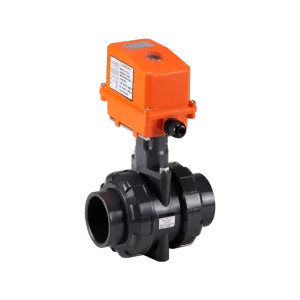
UPVC Electric Actuator True Union Ball Valve
Which is Better: Pneumatic or Electro-Pneumatic?
Hybrid systems promise “best of both worlds” – but often deliver the worst. Learn
where electro-pneumatic makes sense (and where it fails).
Dive Deeper: Hybrid System Breakdown
Component Comparison
| Part | Electro-Pneumatic | Pure Electric |
|---|---|---|
| Control System | PLC + Air Valves | Direct Motor Control |
| Force Generation | Air Pressure (6-8 bar) | Gearbox Torque |
| Emergency Operation | Air Reservoir | Battery Backup |
Optimal Use Cases
Electro-Pneumatic:
- Emergency shut-offs requiring rapid full stroke
- Environments with explosive atmospheres
Pure Electric:
Continuous process control
Cleanroom operations
Why Choose Electric Over Pneumatic Actuators?
“But pneumatic is cheaper” – a myth that costs plants $45k/year in hidden
expenses. Here’s why manufacturers are switching.
Electric actuators reduce total cost of ownership by 40% over 5 years. No
compressed air needs, lower maintenance, and precise control prevent product waste.
Dive Deeper: Lifetime Cost Analysis
Automotive Assembly Line Example (100 actuators)
| Cost Factor | Pneumatic | Electric |
|---|---|---|
| Installation | $52,000 | $68,000 |
| Annual Energy | $26,500 | $8,200 |
| Maintenance/Year | $13,000 | $2,400 |
| 5-Year Total | $198,500 | $110,000 |
Key Savings Drivers
Eliminated air compressor upkeep ($4,200/year)
73% lower energy consumption
80% reduction in seal replacements
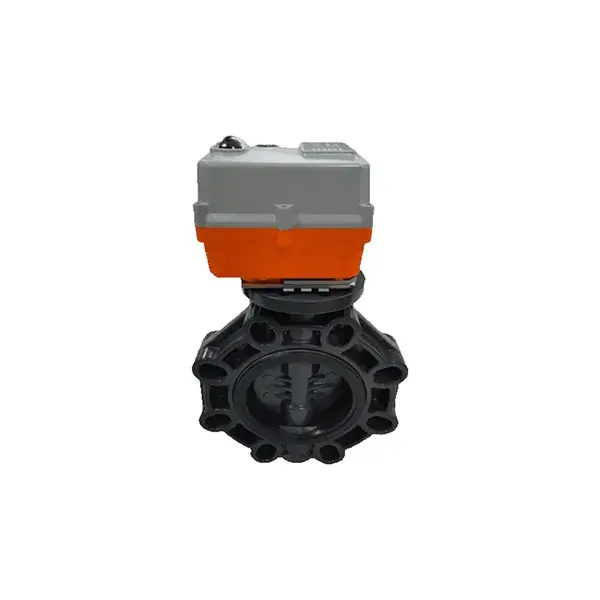
PVC Electric Actuator Butterfly Valve
Are Actuators AC or DC?
Wrong voltage selection causes 38% of premature actuator failures. Learn how to match power supply to your application.
Industrial actuators primarily use 24VDC or 120-480VAC. DC offers precise speed control, while AC handles higher power demands. Always verify supply voltage matches actuator specifications.
Dive Deeper: Power System Design
Voltage Compatibility Guide
| Application | Recommended Type | Why? |
|---|---|---|
| Process Valves | 24VDC | Intrinsic safety |
| Large Dampers | 480VAC | High torque needs |
| Mobile Equipment | 12VDC | Vehicle electrical |
Failure Prevention Tips
Use surge protectors for AC units
Install voltage regulators if grid fluctuates >±10%
Match duty cycle to motor thermal limits
What Are the Cons of Pneumatic Actuators?
Air leaks aren’t just annoying – they’re profit leaks. Discover pneumatic’s eight hidden drawbacks.
Pneumatic systems3 suffer from air compressibility (delayed response), moisture issues, and 20-30% energy loss through leaks. Air quality requirements add filtration costs.
Dive Deeper: Pneumatic Limitations
Response Time Analysis
| Parameter | Pneumatic | Electric |
|---|---|---|
| Full Stroke Time | 2-5 seconds | 0.8-3 seconds |
| Resolution | 5% of range | 0.1% of range |
| Repeatability | ±2.5% | ±0.5% |
Maintenance Pain Points
Daily: Drain moisture traps
Weekly: Check air lubricators
Monthly: Replace worn seals
Quarterly: Clean/replace filters
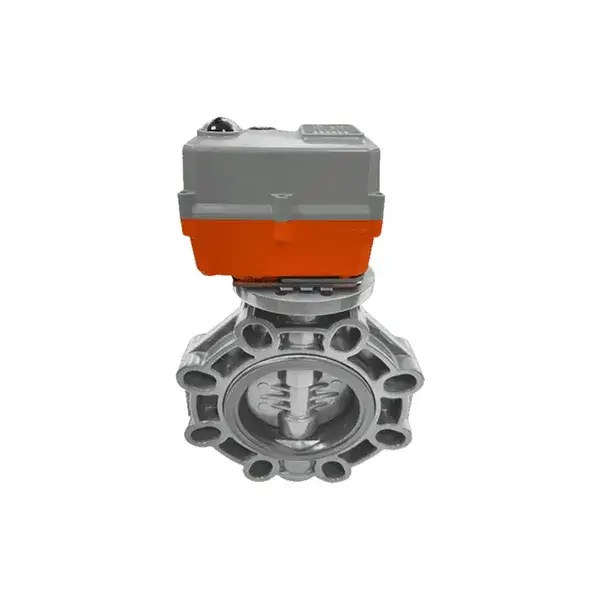
CPVC Electric Actuator Butterfly Valve
How Fast Are Electric Actuators?
Speed isn’t just about time – slow actuators cause batch inconsistencies. Here’s how electric achieves both velocity and precision.
Modern electric actuators reach speeds up to 150mm/s with positioning repeatability of ±0.01mm. Advanced models offer programmable acceleration profiles for delicate operations.
Dive Deeper: Motion Performance
Speed vs Accuracy Tradeoff
| Actuator Class | Max Speed | Positioning Error |
|---|---|---|
| Standard Electric | 80mm/s | ±0.1mm |
| High-Speed Electric | 150mm/s | ±0.25mm |
| Servo Electric | 100mm/s | ±0.01mm |
Acceleration Control
Soft start/stop prevents water hammer
S-curve profiles reduce mechanical stress
10ms response time for emergency stops
Conclusion
Electric actuators outperform pneumatic in precision (0.5% vs 3% error), efficiency (85% vs 30%), and long-term costs – making them the superior choice for modern automated systems despite higher initial investment.
Explore the advantages of electric actuators, including energy efficiency and lower maintenance costs, to enhance your operational reliability. ↩
Learn how energy efficiency affects operational costs and performance, guiding you to choose the right actuator for your needs. ↩
Understanding the limitations of pneumatic systems can help you make informed decisions about actuator selection and improve efficiency. ↩