Ball valves are everywhere, but few know how they really work. If you manage plastic piping systems, this simple device could save you time, cost, and headache.
A ball valve1 in which the ball is driven by the valve stem and rotates around the axis of the valve stem is called a ball valve. A ball valve uses a hollow, porous, swingable ball to control the fluid flowing through it. When the hole in the center of the ball is aligned with the inlet, it is in an open state. When it is swung 90 degrees by the valve handle, the hole is closed and the fluid stops flowing. The ball valve is easy to operate, durable, and can remain safely closed even after long periods of non-use.
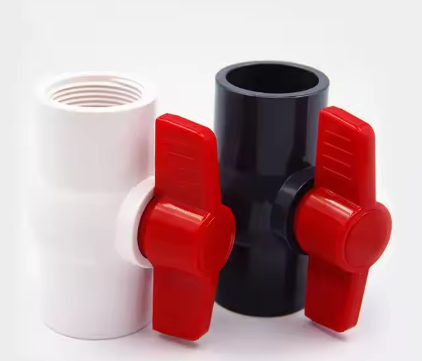
Now let’s break down what makes the ball valve so reliable, so widely used, and what sets it apart from similar valve types.
What is the structure of a ball valve?
Understanding the structure helps us know why ball valves are so efficient. Without this, choosing the right type can be confusing.
A ball valve is made up of a valve body, ball, seats, stem, and handle. The ball rotates to open or close the valve. Seals ensure tight shutoff.

The working parts of a ball valve
A basic ball valve has a few key parts:
| Component | Function |
|---|---|
| Valve Body | Holds all internal parts |
| Ball | Rotates to control flow |
| Seats | Ensure a leak-free seal around the ball |
| Stem | Connects handle to the ball |
| Handle | Used to manually turn the ball |
When you turn the handle, the stem rotates the ball. If the hole in the ball lines up with the pipe, fluid flows. If turned 90 degrees, the hole is perpendicular to the flow and the valve is closed. The ball is usually made from durable materials to resist corrosion and wear.
What are the types of ball valves2?
Ball valves come in many types. Picking the wrong one might mean system failure or high cost.
Common types include full port, reduced port, V-port, three-way, and multi-port ball valves. Each serves different flow and control needs.
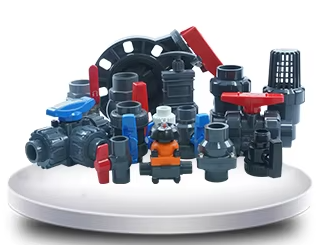
Choosing the right type for your system
Here’s a breakdown of popular ball valve types:
| Type | Description |
|---|---|
| Full Port | No restriction in flow; ideal for minimal pressure drop |
| Reduced Port | Slightly smaller opening; used in standard applications |
| V-Port | V-shaped opening allows controlled flow rate; used in throttling applications |
| Three-Way | Controls flow from multiple directions; used in complex pipe networks |
| Multi-Port | More than three ports; used in industrial systems requiring varied control |
Each type has its use case. I often recommend full port valves in systems where you can’t afford flow loss. For more flexible routing, three-way valves are my go-to.
What are the advantages of using ball valves3?
Ball valves may cost a bit more than gate valves, but the benefits often pay off.
Ball valves are durable, easy to operate, require low maintenance, and offer tight shut-off even after long periods of non-use.
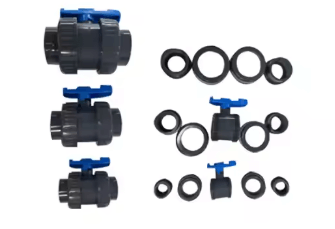
Why I trust ball valves in critical systems
Let’s look at what makes ball valves so valuable:
| Advantage | Benefit |
|---|---|
| Quick Operation | Open/close with a 90-degree turn |
| Leak-Proof | Tight seal reduces chances of fluid or gas leakage |
| Long Lifespan | Resistant to wear and corrosion |
| Minimal Maintenance | Less need for servicing or replacement |
| Versatility | Suitable for gases, liquids, and slurries |
I’ve used ball valves in harsh outdoor conditions and they hold up well even after years without use. That reliability is hard to beat.
What are the applications of ball valves?
Ball valves aren't just for industrial use. You’ll find them everywhere, from your home to high-pressure gas lines.
Ball valves are used in residential plumbing, industrial piping, chemical plants, and HVAC systems. They handle water, gas, and corrosive fluids.

Real-world use cases
Here are common areas where ball valves shine:
| Industry | Use Case |
|---|---|
| Residential | Water shut-off valves for sinks and toilets |
| Industrial Plants | Flow control in chemical processes |
| Oil & Gas | High-pressure gas pipelines |
| HVAC | Chilled water and cooling systems |
| Agriculture | Irrigation systems |
I once helped a customer in the agriculture sector replace worn-out gate valves with ball valves. Their irrigation system became easier to manage, saving them both water and time.
How does a ball valve differ from a gate valve?
Many people confuse these two. Using the wrong one can hurt system performance.
A ball valve opens and closes with a simple turn and seals better. A gate valve rises and lowers a gate, which is slower and less leak-proof.

Comparing two popular valve types
Here’s a side-by-side comparison:
| Feature | Ball Valve | Gate Valve |
|---|---|---|
| Operation | Quick 90-degree turn | Slow, multi-turn operation |
| Seal | Tighter seal | May leak over time |
| Maintenance | Low | Higher |
| Best Use | On/off control | Systems with infrequent operation |
| Flow Restriction | Minimal (in full-port) | More due to internal gate design |
If you need a valve that you’ll open and close often, go with a ball valve. For rarely used emergency shut-offs, a gate valve might be okay. But I always ask myself: will I need to replace this later? If yes, I choose the ball valve.
Conclusion
Ball valves are simple but powerful. They make fluid control easy, fast, and reliable in many systems.
Explore this resource to understand the mechanics and benefits of ball valves, crucial for efficient fluid control in various systems. ↩
This link will provide insights into the various types of ball valves, helping you choose the right one for your specific needs. ↩
Discover the key benefits of ball valves, which can enhance your system's performance and reliability. ↩