Types of Plastic Ball Valves
Plastic ball valves come in various types, including one-piece, two-piece, three-piece, true union, and multi-port designs. Each type serves specific functions in different systems and flow conditions.It can also be classified according to the type of plastic, such as PVC, CPVC and PP.
What is a one-piece plastic ball valve1?
During an early installation, I used a one-piece valve in a system that needed frequent maintenance. The result was wasted time replacing the entire section each time.
A one-piece plastic ball valve is molded as a single body, with no disassembly option. It offers compact size, low cost, and quick shutoff in non-critical applications.
 |  |
 |  |
Technical Overview
| Feature | Description |
|---|---|
| Structure | Single body |
| Repair Option | Not repairable |
| Flow Path | Full bore or standard bore |
| Common Use | Garden systems, temporary installations |
One-piece valves are ideal for small, low-pressure applications where system access is not a priority. I avoid using them in systems that require regular cleaning or flow inspection.
What is a two-piece plastic ball valve2?
I once upgraded from a one-piece to a two-piece design for a high-use area. This gave me flexibility to clean the internal chamber without cutting the pipe.
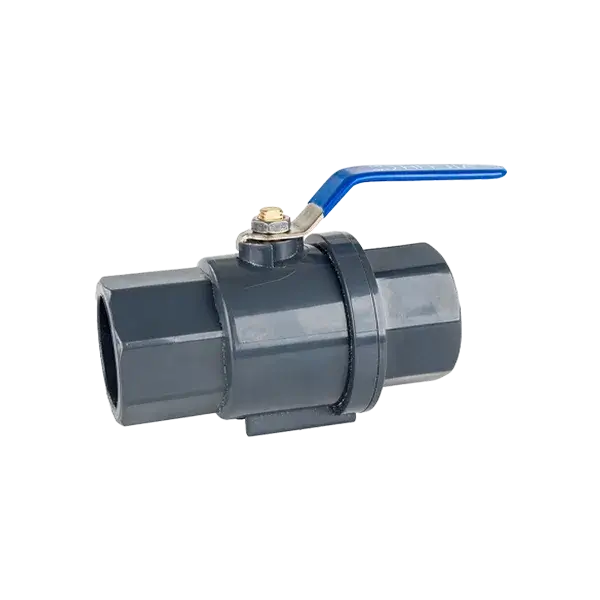
A two-piece plastic ball valve consists of a main body and a threaded cap, allowing limited access to the ball and seals without replacing the full valve.
 |  |
Functional Comparison
| Feature | Description |
|---|---|
| Maintenance Access | Partial (disassemble one end) |
| Cost Level | Moderate |
| Application Type | Medium-duty water or chemical lines |
Two-piece valves strike a balance between simplicity and functionality. I now use them in areas where partial maintenance access is helpful but full disassembly is not necessary.
What is a three-piece plastic ball valve3?
I first used a three-piece valve in a chemical tank line. The ability to remove the center body saved time and prevented product loss during service.
A three-piece plastic ball valve has two end caps and a central body, which can be removed for service or cleaning without disturbing pipe alignment.

Breakdown and Use
| Feature | Description |
|---|---|
| Disassembly Level | Full access to internal parts |
| Repair and Cleaning | Easy, no need to cut the line |
| Ideal Applications | Process lines, corrosive environments |
I choose three-piece valves when downtime must be minimized. The modular body allows me to clean or replace internal parts without removing the entire valve from the pipeline.
What is a true union plastic ball valve?
One time, I needed to modify a filtration line layout. The union design let me disconnect and rotate the valve without cutting any pipe.
A true union plastic ball valve features double union ends, allowing removal of the valve body while the pipe system stays in place. It offers maximum service flexibility.

Advantages of True Union Design
| Component | Purpose |
|---|---|
| Union Ends | Detachable connection points |
| Locking Nut | Secures valve to pipe without solvent |
| Reusability | High—valve can be removed and reused |
True union valves are now my first choice for filter lines, dosing systems, and irrigation heads that require seasonal disassembly.
What is a multi-port plastic ball valve?
In a distribution system for fertigation, I replaced three valves with a single multi-port unit. This reduced fittings and simplified operation.
A multi-port plastic ball valve4 has three or four ports and allows flow direction control between multiple pipelines. It reduces space usage and simplifies system layouts.

Flow Configuration Options
| Port Count | Function | Typical Use |
|---|---|---|
| 3-Way (T) | Mix or divert flow | Dosing, mixing, fertigation loops |
| 3-Way (L) | Select one outlet at a time | Alternate lines or tank switch |
| 4-Way | Complex redirection systems | Valve automation or system bypass |
I now use T-port 3-way valves for feeding multiple beds from a single line. This setup reduces valve count and labor.
Conclusion
Plastic ball valves come in multiple types, each suited to different flow, maintenance, and access needs. Selecting the right type ensures efficiency, durability, and operational control.
Explore the benefits of one-piece plastic ball valves for compact and cost-effective solutions. ↩
Learn how two-piece plastic ball valves offer maintenance flexibility and moderate cost. ↩
Discover the advantages of three-piece plastic ball valves for easy service and cleaning. ↩
Understand how multi-port plastic ball valves simplify flow direction control in complex systems. ↩