PVC pipe fittings[^1] look simple, but confusion about standards creates delays, higher costs, and even failures.
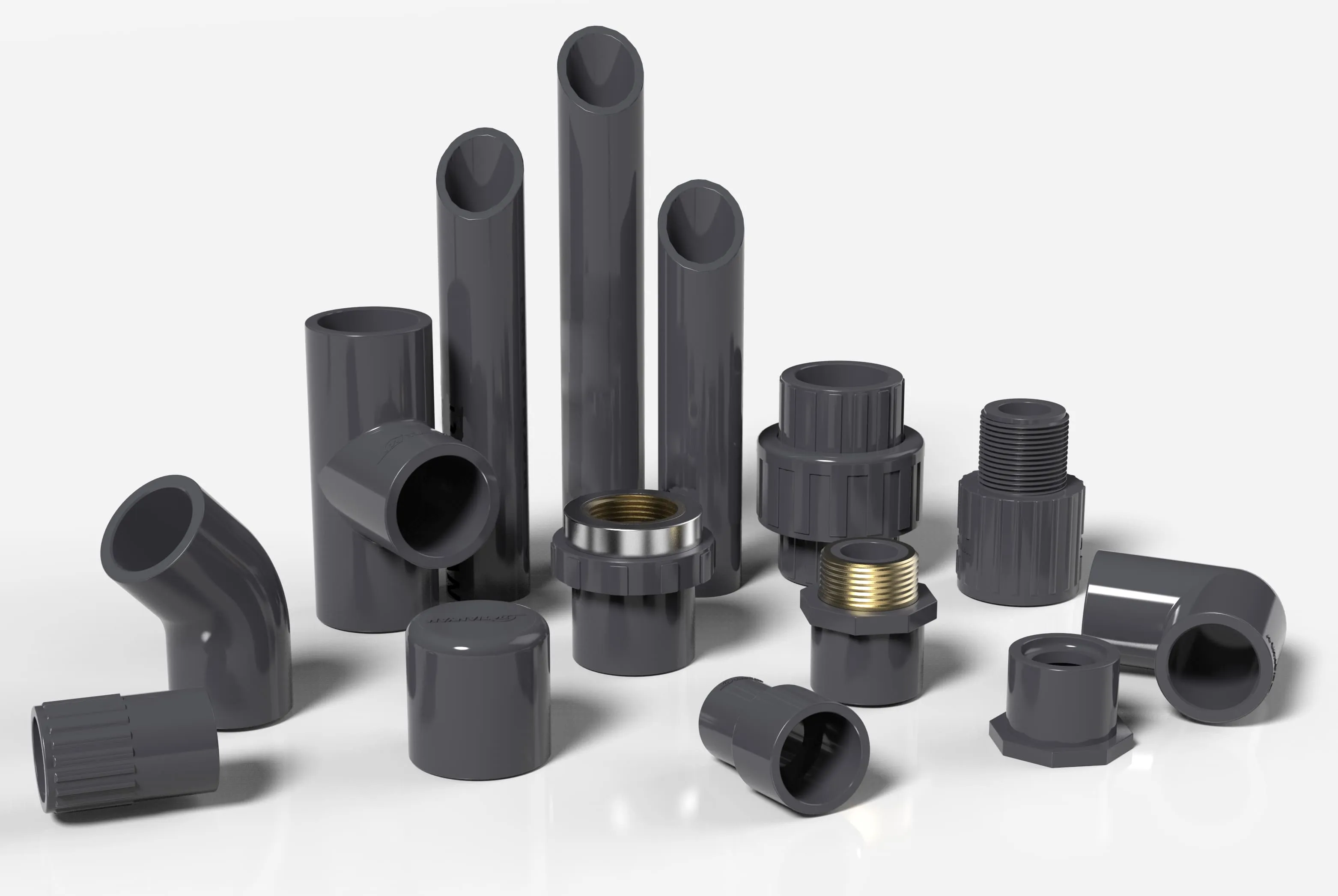
PVC pipe fittings[^1] follow different standards depending on country and application. These standards include GB/T[^2], DIN[^3], ISO[^4], EN, ASTM[^5], JIS[^6], BS, and CNS[^7]. Each regulates dimensions, pressure ratings, and performance.

When I first sourced fittings for export, I made mistakes by mixing standards. My clients could not install the parts properly. That experience taught me that understanding standards is the first step to building a stable supply chain.
What are the standards for PVC pipe fittings[^1]?
Many purchasing managers struggle with this because one market uses DIN, another uses ASTM, and another asks for ISO. This causes confusion.
PVC pipe fitting standards vary by country. Common ones include GB/T 10002.1-2006 (China), DIN[^3] 8061/8063 (Germany), ISO[^4] 4422, EN 1452 (EU), ASTM[^5] D 2665 SCH40 and ASTM[^5] D 2467 SCH80 (USA), JIS K 6742 (Japan), BS4346[^8] (UK), and CNS 4053-1 (Taiwan).

Global standards breakdown
When I worked with international buyers, I often needed to explain the difference between these standards. Below is a clear breakdown:
| Country/Region | Standard Code | Application | Notes |
|---|---|---|---|
| China | GB/T[^2] 10002.1-2006 | Water supply | Widely used in Chinese projects |
| Germany | DIN[^3] 8061, DIN[^3] 8063 | Water supply | Common in Europe |
| ISO[^4] | ISO[^4] 4422 | Water supply | Global recognition |
| EU | EN 1452 | Water supply | Standard in EU projects |
| USA | ASTM[^5] D 2665 SCH40 | DWV[^9] | Used for drain, waste, vent |
| USA | ASTM[^5] D 2467 SCH80 | Water supply | Thick wall, higher pressure |
| Japan | JIS[^6] K 6742 | Water supply | Japanese projects |
| UK | BS 4346 | Water supply | UK specific |
| Taiwan | CNS[^7] 4053-1 | Water supply | Taiwan local market |
The key insight is that ASTM[^5] D 2665 SCH40 is not for water supply but for DWV[^9] (drain, waste, vent). The others focus on pressure water applications. If a buyer does not pay attention, they may purchase the wrong type and face costly rework.
Why standards matter
I once had a Canadian customer who mistakenly ordered DIN[^3] fittings for a U.S. project. None of the threads matched. He lost two weeks and thousands of dollars in delay. Since then, I always confirm the local standard before shipment. This is not just about size but about safety and compatibility.
What does PN mean in pipes?
Many people see "PN[^10]16" or "PN[^10]10" printed on pipes and fittings but do not understand what it means.
PN[^10] in pipes means "Pressure Nominal". It shows the pressure rating in bars at 20°C. For example, PN[^10]16 means the pipe can handle 16 bar pressure at room temperature.
Understanding PN[^10] values
When I first handled PN[^10]-rated fittings, I assumed PN[^10] was a model number. Later, I learned that PN[^10] is a direct link to how much pressure the pipe can safely handle.
| PN[^10] Rating | Pressure (Bar) | Common Use |
|---|---|---|
| PN[^10]6 | 6 bar | Low-pressure irrigation |
| PN[^10]10 | 10 bar | Residential water supply |
| PN[^10]16 | 16 bar | Industrial and municipal supply |
| PN[^10]25 | 25 bar | High-pressure industrial systems |
Conversion between different pressure units
Real-world importance
If you use PN[^10]6 pipes in a PN[^10]16 system, they will crack under stress. I saw this in a factory where cheap fittings were installed in a high-pressure system. The pipes burst, flooding the workshop. After that, the company standardized on PN[^10]16 fittings for safety.
[PN]https://swdplastic.com/pressure-converter/)[^10] values are not just numbers. They are the key to preventing leaks and failures in critical systems.
What is a DWV[^9] pipe?
DWV[^9] is a common term, but many people confuse it with pressure pipes.
DWV[^9] stands for Drain, Waste, and Vent. DWV[^9] pipes are used for gravity flow of sewage and ventilation, not for pressurized water supply.

DWV[^9] vs. pressure pipes
The main difference is wall thickness. ASTM[^5] D 2665 SCH40 is a DWV[^9] standard. It has thinner walls compared to SCH80. It is not designed to handle high water pressure.
| Pipe Type | Standard | Wall Thickness | Application |
|---|---|---|---|
| DWV[^9] (SCH40) | ASTM[^5] D 2665 | Thin | Drain, waste, vent |
| Pressure | ASTM[^5] D 2467 SCH80 | Thick | Water supply |
Why confusion happens
I once had a client in South America who used DWV[^9] pipes for water supply because they looked similar to SCH80. Within months, cracks appeared in the system. They had to replace everything. The lesson: always match the pipe type with its standard.
DWV[^9] pipes are excellent for drainage systems but should never be used where pressure is involved.
What are the thread standards for PVC pipe fittings[^1]?
Thread standards are often overlooked until installation fails.
The main thread standards for PVC pipe fittings[^1] are NPT[^11] (National Pipe Thread, USA), BSP[^12] (British Standard Pipe, UK and Commonwealth), and metric threads (Europe and Asia).

Comparing thread standards
In my work, mismatched threads caused the most complaints. BSP[^12] and NPT[^11] look similar but are not compatible. A BSP[^12]T fitting will not seal properly with an NPT[^11] thread.
| Thread Standard | Region | Angle | Seal Type | Common Use |
|---|---|---|---|---|
| NPT[^11] | USA, Canada | 60° | Tapered | ASTM[^5] fittings |
| BSP[^12]T | UK, Asia | 55° | Tapered | British market |
| BSP[^12]P | UK, Asia | 55° | Parallel | Low-pressure |
| Metric | EU, China | Varies | Parallel | ISO[^4] fittings |
My personal experience
One of my first mistakes in the valve business was shipping NPT[^11] fittings to a UK buyer who needed BSP[^12]T. They called me angry because the fittings leaked. I had to replace the whole order at my own cost. Since then, I always double-check thread standards with every client.
Thread mismatches cause leaks, weak joints, and even project failures. Understanding thread standards is as important as knowing pipe standards.
Conclusion
PVC fitting standards vary worldwide. Knowing PN[^10], DWV[^9], and thread types prevents mistakes and ensures safe, reliable installations.
- Understanding the standards for PVC pipe fittings is crucial for ensuring compatibility and safety in installations.
- Explore the GB/T standard to understand its significance in the Chinese market for PVC fittings.
- Learn about the DIN standard to ensure compliance and quality in European projects involving PVC fittings.
- Discover the ISO standard for PVC fittings, which is recognized globally for its quality and safety.
- Understanding ASTM standards is essential for projects in the USA, ensuring proper material selection.
- Learn about the JIS standard to ensure quality and compatibility in Japanese plumbing applications.
- Explore the CNS standard to understand its relevance in the Taiwanese market for PVC fittings.
- Understanding the BS4346 standard is important for ensuring compliance in UK-specific projects.
- Explore the concept of DWV to understand its role in drainage systems and avoid costly mistakes.
10 Learn about PN ratings to ensure you select the right pipes for your pressure requirements. - Understanding NPT threads is vital for ensuring proper sealing and compatibility in plumbing installations.
- Learn about BSP threads to avoid mismatches and ensure reliable connections in your plumbing projects.