CPVC ball valves have become one of the most widely used flow control solutions in both residential and industrial applications.
CPVC ball valves are made from chlorinated polyvinyl chloride, offering high temperature resistance, strong chemical stability, and long-term corrosion protection for reliable performance.
I’ve used CPVC valves for years in many projects — from water systems to chemical lines — and they continue to outperform expectations. This guide will help you understand every detail before choosing one.
What is a CPVC Ball Valve?
A CPVC ball valve is a flow control device designed to regulate or stop the movement of fluids through a pipeline.
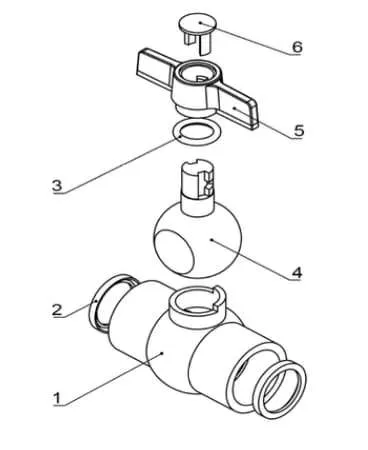
It features a spherical ball inside a CPVC body that turns to open or close the flow passage.

There are several common styles of CPVC ball valves:
- Compact Ball Valve – small and economical, ideal for home use.
- Single Union Ball Valve – one removable end for easy servicing.
- Flange-End Ball Valve – connects large industrial pipelines.
- True Union Ball Valve – removable body for maintenance without cutting pipes.
I often recommend the True union type1 for clients who need frequent cleaning or maintenance because it allows full valve removal with minimal downtime.
Internal Structure of CPVC Ball Valves
| Component | Function |
|---|---|
| Valve Body | Holds all internal components |
| Ball | Rotates to control the flow |
| Seats | Ensure sealing between the ball and body |
| Stem | Connects the handle to the ball |
| Handle | Provides manual control2 for operation |
This simple design makes CPVC ball valves reliable, leak-resistant, and easy to operate.
How Does a CPVC Ball Valve Work?
A CPVC ball valve operates through a simple 90-degree rotation mechanism.
When the handle turns, it rotates the ball inside the valve to align or block the flow path.
When the handle aligns with the pipe, the valve is open; when perpendicular, it’s closed.
This quick action design makes it efficient for both manual and automated systems. Some advanced CPVC valves can also be equipped with electric or pneumatic actuators for remote operation.
How Long Does a CPVC Ball Valve Last?
The service life3 of a CPVC ball valve depends on environment, temperature, and maintenance.
In general, CPVC ball valves last between 8 and 12 years, sometimes longer when properly maintained.
I’ve seen CPVC valves in clean water systems last more than 10 years without issues. They resist scaling and corrosion better than metal valves, reducing long-term costs.
Tips to extend lifespan:
- Avoid overtightening during installation.
- Use correct solvent cement and allow full curing.
- Apply UV protection for outdoor systems.
Proper installation is the key to long-lasting performance.
What Are the Key Advantages of CPVC Ball Valves?
CPVC ball valves are chosen for their balance of strength, safety, and affordability.
They are heat resistant, chemically stable, corrosion proof, lightweight, and easy to install.
Benefits in Detail
- High Temperature Resistance – Handles up to 93°C (200°F), ideal for hot water and process systems.
- Excellent Chemical Resistance – Suitable for acids, bases, and corrosive fluids.
- Lightweight and Easy Installation – Requires less support and labor than metal valves.
- Low Maintenance – Smooth surface prevents buildup and clogging.
- Cost-Effective – Long service life3 reduces total ownership cost.
These combined benefits make CPVC valves one of the most reliable components for fluid systems.
What CPVC Ball Valve Used For?
CPVC ball valves are used for fluids in applications requiring high temperature, chemical, and corrosion resistance, including industrial processes, piping systems, and water treatment facilities.

| Application | Reason for Use |
|---|---|
| Hot Water Systems | Excellent thermal resistance |
| Chemical Processing | Strong corrosion resistance |
| Irrigation | Lightweight and easy to install |
| Water Treatment | Maintains purity and prevents contamination |
| Industrial Piping | Provides dependable shutoff performance |
In my experience, CPVC ball valvesdeliver consistent performance in both high-temperature and chemically aggressive environments.
CPVC What Problems May Occur with CPVC Ball Valves
Even though CPVC is durable, poor handling can lead to problems.
Common issues include cracking, leakage, and handle damage4 — mostly caused by improper installation or over-torqueing.

| Problem | Cause | Solution |
|---|---|---|
| Handle Breakage | Too much torque | Use reinforced or metal-core handles |
| Leakage | Wrong solvent or incomplete curing | Use proper cement and curing time |
| Cracking | Over-tightening | Follow torque recommendations |
| UV Damage | Prolonged sunlight exposure | Apply UV-protective coatings |
| Stiff Operation | Dirt or scaling | Periodic cleaning or flushing |
From my own projects, more than 80% of valve failures are installation-related, not material faults. Correct installation almost always prevents future issues.
What Is the Difference Between CPVC and PVC Ball Valves?
Though they look similar, CPVC and PVC valves are designed for different environments.
The key difference is that CPVC can handle higher temperatures and stronger chemicals than PVC.
The Difference Between CPVC, PVC
| Property | CPVC | PVC |
|---|---|---|
| Max Operating Temperature | 93°C | 60°C |
| Chemical Resistance | Excellent | Good |
| Corrosion Resistance | High | Moderate |
| Strength | Stronger | Less durable |
| Cost | Slightly higher | Lower |
| Application | Hot water and chemicals | Cold water and general plumbing |

The additional chlorination process gives CPVC improved heat and chemical resistance, making it the better choice for industrial or hot water applications.
FAQ: Frequently Asked Questions About CPVC Ball Valves
1. Can CPVC ball valves be used for drinking water?
Yes. CPVC is approved for potable water use in many countries because it doesn’t leach harmful substances and resists bacterial growth.
2. Can I use CPVC ball valvesfor compressed air?
Not recommended. CPVC is not designed to handle the rapid pressure changes or vibration associated with air compression systems.
3. What’s the maximum working pressure for CPVC ball valves?
Most CPVC ball valves are rated for 150 PSI at 23°C (73°F) and 100 PSI at 60°C (140°F). Always confirm with the manufacturer for exact ratings.
4. Do CPVC ball valves need lubrication?
No. The valve’s internal seats (usually PTFE) are self-lubricating and do not require additional grease.
5. How do I know if my CPVC valve is failing?
Signs include stiff handle movement, small leaks around the stem, or discoloration on the body. Early replacement prevents system downtime.
6. Can CPVC ball valvesbe recycled?
Yes, CPVC can be mechanically recycled, though it must be separated from PVC due to chemical differences.
Conclusion
CPVC ball valves combine heat resistance, chemical durability, and cost efficiency — making them one of the best long-term choices for reliable fluid control across residential and industrial systems.
Learn why the double union type is recommended for maintenance and cleaning. ↩
Understand the mechanics of manual control in ball valves for effective operation. ↩
Discover how to maximize the service life of CPVC ball valves in your systems. ↩ ↩
Learn about the common causes of handle damage and prevention methods. ↩