PVDF pipe applications are mainly found in high-purity water systems, semiconductor chemical lines, lithium battery production, fine chemical processing, strong acid transfer and high-reliability industrial fluid systems.
PVDF offers stronger chemical resistance, better temperature resistance and higher purity than PVC, CPVC and PPH. It is suitable for many acids, salts, high-purity fluids and demanding chemical systems. However, PVDF is not recommended for high-temperature strong alkalis, concentrated alkali liquids, some amines and some strong polar solvents.
What is PVDF pipe used for?
PVDF pipe is used for strong corrosive chemicals, high-purity water, electronic chemicals, semiconductor cleaning fluids, lithium battery chemical liquids and high-reliability chemical piping systems.
High-purity PVDF piping system installed in a cleanroom environment for semiconductor or ultrapure water systems.
| Application | Why PVDF Is Used |
|---|---|
| High-purity water systems | Low contamination and good cleanliness |
| Ultrapure water systems | Suitable for high-purity fluid distribution |
| Semiconductor piping | Suitable for selected high-purity chemical lines |
| Lithium battery production | Used for selected acidic chemical liquids |
| Fine chemical systems | Good corrosion resistance and long-term stability |
| Pharmaceutical equipment | Suitable for clean and stable fluid systems |
| Strong acid transfer | Better acid resistance than many common plastics |
| Corrosive waste liquid treatment | Used where reliability is important |
| Corrosive gas scrubber systems | Suitable for many high-corrosion environments |
PVDF is often selected when PVC, CPVC or PPH cannot provide enough chemical resistance, temperature resistance or purity.
What chemicals can PVDF pipe handle?
PVDF pipe can handle many strong acids, salt solutions, high-purity fluids and selected electronic chemicals.
| Suitable Media | Typical Examples |
|---|---|
| Strong acids1 | Hydrochloric acid, sulfuric acid, hydrobromic acid |
| Medium concentration acids | Low to medium concentration nitric acid, acetic acid solution |
| Salt solutions | Aluminum salt solution, ammonium salt solution, many inorganic salt solutions |
| Acidic waste liquids | Industrial waste acid, acidic chemical wastewater |
| High-purity fluids | High-purity water, ultrapure water |
| Electronic chemicals | Selected semiconductor cleaning liquids and process chemicals |
| Lithium battery chemicals | Selected acidic chemical liquids used in battery production |
| Chemical process liquids | Fine chemical liquids requiring high stability |
| Other water-based media | Carbonic acid solution and many inorganic water-based solutions |
PVDF is especially useful in applications where chemical resistance, purity and long-term stability are more important than low initial cost.
What chemicals are not recommended for PVDF pipe?
PVDF pipe is not recommended for high-temperature strong alkalis, concentrated alkali liquids, some amines, some ketones, some esters2, certain strong polar solvents and molten alkali metals.

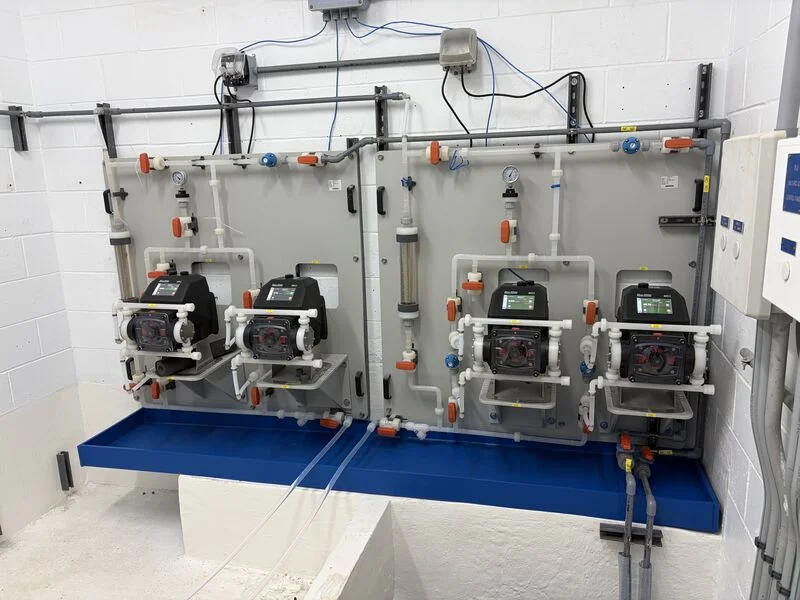
- Industrial PVDF pipes and fittings prepared for aggressive chemical and strong acid distribution systems.*
| Not Recommended Media | Risk |
|---|---|
| High-temperature sodium hydroxide3 | Strong alkali attack risk |
| Concentrated sodium hydroxide | Not recommended for long-term use |
| Concentrated potassium hydroxide | Compatibility risk |
| High-temperature strong alkali solutions | May reduce long-term stability |
| Some amines | May cause chemical attack or stress cracking |
| Some ketone solvents | Compatibility must be checked |
| Some ester solvents | Not recommended without confirmation |
| Certain strong polar solvents | May affect PVDF stability |
| Molten alkali metals | Not suitable |
| Long-term high-temperature alkaline conditions | May reduce service life |
PVDF has excellent acid resistance, but strong alkali compatibility must be checked carefully, especially at high temperature or high concentration.
What standards are used for PVDF pipe?
PVDF pipes are used in chemical piping, high-purity systems and industrial fluid systems.
| Application | Common Standards | Common Pressure Classes |
|---|---|---|
| Chemical piping | ISO 10931, ISO 15494 | PN10, PN16 |
| Industrial PVDF pressure pipe | ASTM F1673, ASTM D3222 or project-specified standards | Schedule 40, Schedule 80 |
| High-purity water systems | ISO, ASTM and project-specific high-purity requirements | Based on system design |
| Semiconductor piping | High-purity PVDF system requirements | Based on cleanliness and pressure |
| Strong corrosive chemical systems | ISO, DIN, ASTM series | PN10, PN16, SCH80 |
PVDF systems may use socket welding, butt welding, infrared welding4 or other high-purity joining methods depending on the application.
What pressure ratings are available for PVDF pipe?
Common PVDF pipe pressure ratings include PN10, PN16, Schedule 40 and Schedule 80.
For high-purity water and semiconductor systems, pressure rating is selected according to system design, cleanliness requirements and joining method. For chemical systems, PN10, PN16 or Schedule 80 are common choices.
Pressure selection should consider:
- Chemical type
- Chemical concentration
- Working temperature
- System pressure
- Pipe diameter
- Joining method
- Cleanliness requirement
- Continuous operation time
- Safety factor
PVDF also requires temperature derating. Higher temperature reduces the allowable working pressure of the pipe.
How to select PVDF pipe for different applications?
PVDF pipe is suitable for high-performance systems where corrosion resistance, purity and long-term reliability are critical.
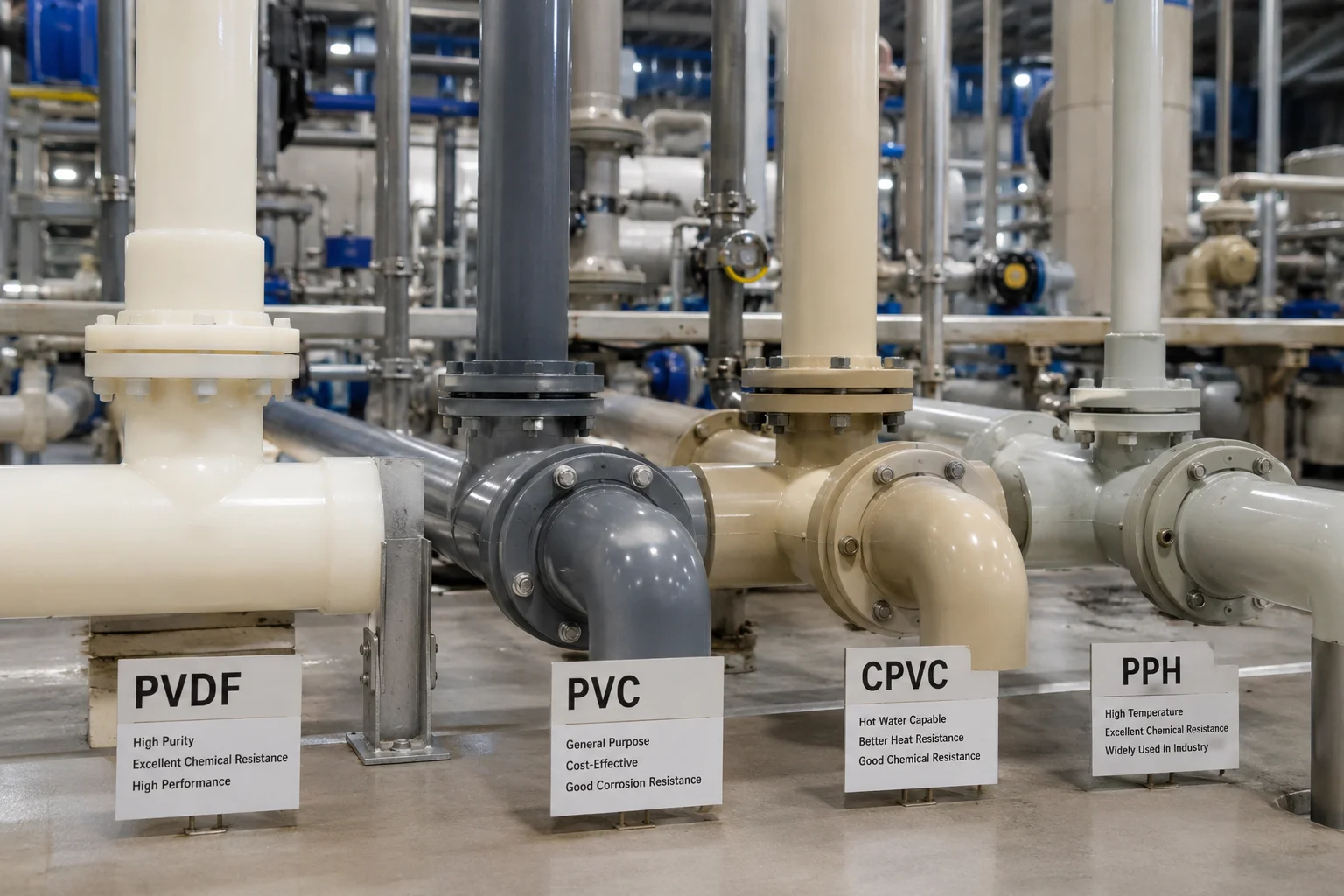
High-performance PVDF industrial pipes compared for advanced chemical processing applications.
| Application Condition | PVDF Selection Advice |
|---|---|
| Strong acid transfer | PVDF is often suitable |
| High-purity water | PVDF is commonly used |
| Semiconductor chemical lines | PVDF is suitable for selected high-purity fluids |
| Lithium battery acidic chemical liquids | PVDF may be suitable after checking the medium |
| Fine chemical process lines | PVDF is a strong option |
| Corrosive wastewater with high risk | PVDF offers better stability |
| High-temperature strong alkali | PVDF is not recommended without confirmation |
| Concentrated alkali liquid | Use caution; check compatibility carefully |
| Standard water treatment | PVC may be more economical |
| Acid and alkali wastewater | PPH may be more economical |
| Medium-temperature hot water or chemical water | CPVC may be enough |
PVDF is used for high-performance chemical systems.
For standard water treatment or general wastewater applications, PVC pipe, CPVC pipe or PPH pipe may be more economical.
Summary
PVDF pipe is suitable for:
Hydrochloric acid, sulfuric acid, hydrobromic acid, low to medium concentration nitric acid, acetic acid solution, industrial waste acid, high-purity water, ultrapure water, electronic chemicals, selected semiconductor cleaning liquids, selected lithium battery acidic chemical liquids and high-reliability chemical systems.
PVDF pipe is not recommended for:
High-temperature strong alkalis, concentrated sodium hydroxide, concentrated potassium hydroxide, some amines, some ketones, some esters, certain strong polar solvents, molten alkali metals and long-term high-temperature alkaline environments.
PVDF is best positioned as a high-performance plastic pipe material for strong corrosion, high-purity, high-temperature and high-reliability chemical systems.
"Impacts of Sulfuric Acid on the Stability and Separation Performance ...", https://pmc.ncbi.nlm.nih.gov/articles/PMC7760507/. PVDF exhibits excellent resistance to mineral acids including concentrated sulfuric acid, hydrochloric acid, and hydrobromic acid at temperatures up to 100°C, due to the inertness of the fluoropolymer backbone. Evidence role: mechanism; source type: research. Supports: resistance of PVDF to mineral acids across concentration ranges. Scope note: Resistance varies with acid concentration, temperature, and exposure duration; specific applications require compatibility testing ↩
"On the Solubility and Stability of Polyvinylidene Fluoride - PMC", https://pmc.ncbi.nlm.nih.gov/articles/PMC8122610/. While PVDF exhibits excellent resistance to most solvents, certain polar aprotic solvents including some ketones (e.g., methyl ethyl ketone at elevated temperatures) and esters can cause swelling or stress cracking, particularly under combined chemical and mechanical stress. Evidence role: mechanism; source type: research. Supports: solvent interactions with fluoropolymers. Scope note: Solvent compatibility is highly specific to molecular structure, concentration, temperature, and exposure duration; compatibility testing is essential for specific solvent applications ↩
"Brief Review of PVDF Properties and Applications Potential - PMC", https://pmc.ncbi.nlm.nih.gov/articles/PMC9698228/. PVDF undergoes dehydrofluorination when exposed to strong bases at elevated temperatures, leading to chain degradation and loss of mechanical properties, particularly above 60°C with concentrated sodium hydroxide. Evidence role: mechanism; source type: research. Supports: degradation mechanism of PVDF in hot alkaline environments. Scope note: Degradation rate depends on concentration, temperature, and exposure time; dilute solutions at ambient temperature may be tolerable ↩
"[PDF] Pipe Welding Techniques: A Closer Look at PVDF Pipe for ...", https://www.4spe.org/files/W10-PALOVCAK_Pipe_Welding_Techniques.pdf. PVDF pipes are joined using heat fusion methods including butt fusion, socket fusion, and infrared welding, which create molecular bonds between pipe sections; these methods are preferred in high-purity applications to avoid contamination from adhesives or mechanical joints. Evidence role: mechanism; source type: research. Supports: thermoplastic welding methods used for PVDF piping systems. Scope note: Welding parameters (temperature, pressure, cooling time) are material-specific and critical for joint integrity; operator certification may be required for critical applications ↩