I have seen many purchasing managers struggle with repeated ball valve failures1. The problems look simple at first, but the real usually lies in wrong material selection2, improper installation3, or system conditions that exceed the valve’s limits.
Most ball valve problems come from wrong materials, incorrect installation steps, or pressure and temperature that go beyond what the valve can handle.
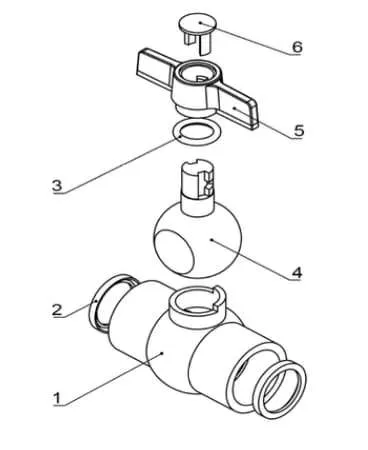
These issues often appear again and again, but once you understand their root causes, they are easy to prevent.
PVC Ball Valve Leaking at Installation Point (improper installation3)?
Leaks at the installation point are the most common and the easiest to misunderstand. Many people think the valve is defective, but most of these leaks come from installation mistakes.
Installation leaks usually happen because the pipe and valve are misaligned, torque is uneven, thread sealant4 is applied too lightly, or the valve threads were not molded correctly during production.

Why does the installation joint leak?
Leaks at the installation joint occur when the pipe outer diameter and the valve inlet do not match perfectly. Even a small angle or height difference forces the valve into a twisted position. This creates side pressure on the sealing face. When this happens, no amount of tightening can produce a complete seal.
Uneven torque is another reason. If one installer tightens one side too much while the other side remains loose, the sealing surface shifts. The O-ring or thread seal becomes distorted, and water escapes through small gaps. I often see this when workers rush the job or use heavy tools instead of hand tightening.
Thread sealant is also important. If primer or sealant is used too lightly, the threads cannot hold pressure. Water will slowly seep out when the system is charged. I always advise applying a full and even coat to every thread—not just a thin layer.
Production defects can also cause leaks. If the injection molding process creates rough threads, shallow threads, or threads that are not perfectly round, the pipe and valve will never form a tight seal. These defects are not visible until installation pressure testing.
A clean, stable installation requires three things:
- pipe and valve must align naturally,
- torque must be even on both sides,
- and sealant must fully cover the threads.
When these steps are followed, installation leaks disappear completely.
Ball valve leaking at the handle (improper seal at the stem)?
Leaks at the handle happen when the top seal or stem gasket is missing, damaged, or installed incorrectly.
A handle leak usually comes from a misplaced gasket, a loose packing nut, or a missing stem seal.

Why does the handle area leak?
Many low-cost valves depend on a small gasket around the stem to stop water. If this gasket is not installed correctly, or if the packing nut loosens during transport, the seal weakens. Water then climbs up the stem and leaks out below the handle.
Sometimes the manufacturer uses poor-quality material for the gasket. It hardens, loses shape, and cannot keep pressure. The fastest way to avoid this problem is to choose higher-grade EPDM or FKM stem seals, or upgrade the valve style.
When a buyer needs easy maintenance, I always recommend a union ball valve. This structure allows the user to remove and replace stem seals without replacing the entire valve.
Internal leaks (seat wear and seal failure)?
Internal leaking happens inside the valve and cannot be seen from the outside. The valve looks fine but cannot shut off completely.
Internal leaks come from worn valve seats5, scratched balls, chemical corrosion6, or temperature damage7 that reduces sealing strength.

Why does the inside start leaking?
The most common reason is that the seat material does not match the fluid. EPDM works for water, but it swells in oils, solvents, and acidic fluids. Once the seat swells, the ball cannot press evenly against it. Even when the valve is closed, water passes through.
Debris also creates internal leaks8. Sand, rust, or particles scratch the ball when the valve turns. These tiny scratches form channels that let water flow even when closed. I once checked a system where the upstream filter broke and sand entered the valve. Every ball surface was scratched, causing internal leaks8 everywhere.
Temperature also affects sealing. PVC softens around 55°C, and the seats lose elasticity. When a system runs hotter than expected, the valve cannot maintain proper sealing force.
Correct seat material, good filtration, and correct temperature limits solve most internal leak problems.
Handle breakage (UV aging9 and torque stress)?
Handle breakage is a common complaint. It causes downtime and makes the valve impossible to operate.
Handles break because of UV exposure, long-term torque stress, or weak metal inserts inside the handle.
Why do handles snap?
Sunlight breaks down plastic. After long exposure, the handle becomes brittle. When someone tries to turn the valve, the handle cracks. This is common in outdoor irrigation, chemical dosing, and rooftop installations.
Torque pressure is another cause. If debris, swelling seats, or high pressure make the valve hard to turn, operators often apply extra force. The metal insert inside the handle is supposed to carry the load, but if it is thin or low-quality, it snaps.
For systems that require frequent operation, I recommend a union-type ball valve. It allows users to replace the handle easily without replacing the whole valve.
Cracking body (production defects10 and overpressure)?
A cracked valve body is the most serious failure. It usually means the valve lost structural strength long before installation.
Body cracking happens because of pressure spikes11, UV aging9, or injection-molding defects such as uneven cooling, short holding time, or poor resin flow.
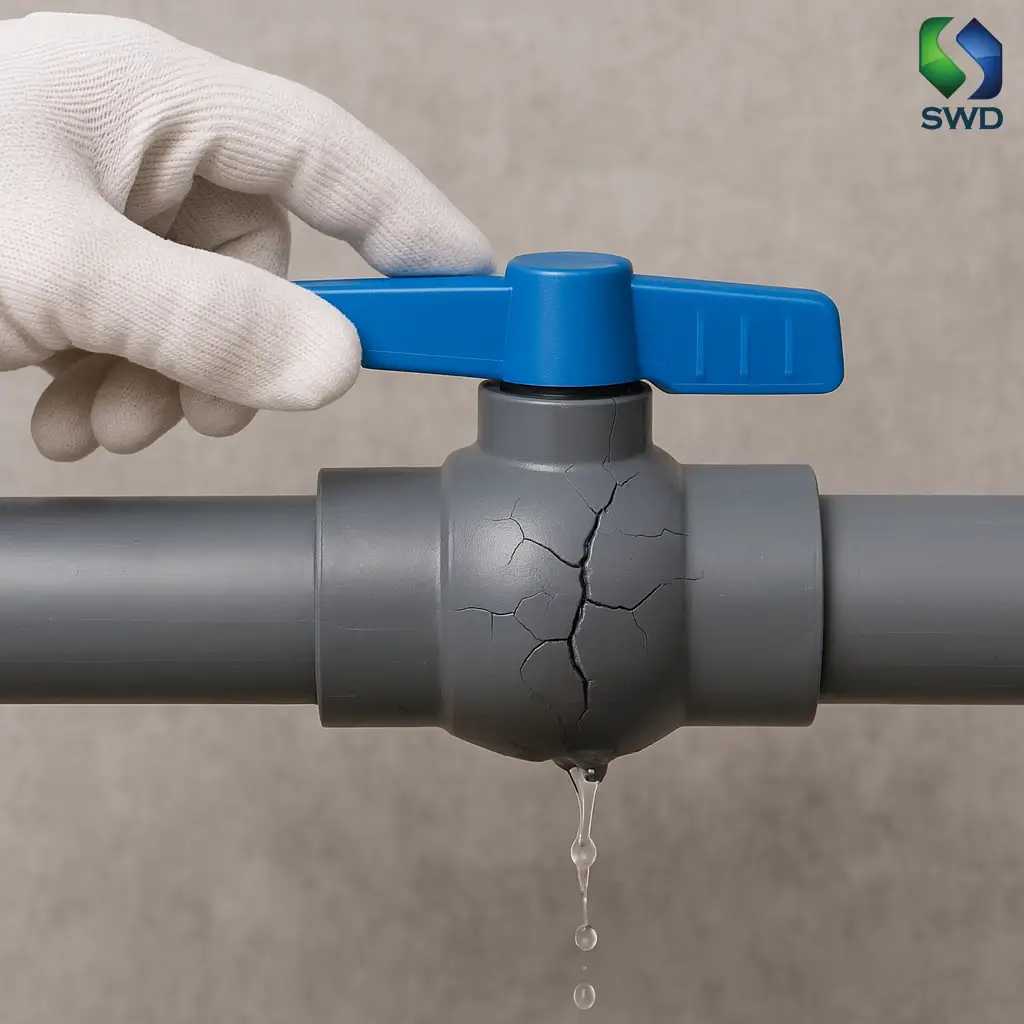
Why does the valve body crack?
Overpressure and water hammer are the biggest factors. Pressure spikes hit the valve body hard, far beyond its rating. SCH80 valves resist this better than SCH40.
UV weakness is another cause. Sunlight makes PVC brittle over time. Small surface cracks turn into large fractures during pressure cycles.
Manufacturing defects also lead to cracking. If the cooling time is too short, or the holding pressure during molding is not enough, the internal structure becomes weak. These defects are invisible during inspection but appear during pressure testing.
To avoid cracking, choose reliable suppliers, request pressure test reports, and use SCH80 or CPVC in demanding systems.
Conclusion
Ball valve failures look different on the surface, but most of them come from mismatched materials, installation mistakes, or system conditions that exceed the valve’s limits. When you understand the root causes, every problem becomes easy to prevent.
Understanding the causes of ball valve failures can help you prevent costly downtime and improve system reliability. ↩
Exploring material selection can help you choose the right components for your ball valves, ensuring better performance and longevity. ↩
Learning about installation consequences can help you avoid common mistakes and ensure a proper seal. ↩ ↩
Exploring the role of thread sealant can enhance your installation techniques and prevent leaks. ↩
Understanding the role of valve seats can help you select the right materials and prevent leaks. ↩
Understanding chemical corrosion can help you select the right materials for your specific applications. ↩
Learning about temperature effects can help you choose valves that withstand your system's conditions. ↩
Identifying internal leak causes can help you maintain valve integrity and prevent system failures. ↩ ↩
Understanding UV aging can help you choose materials that resist environmental damage. ↩ ↩
Identifying production defects can help you choose reliable suppliers and ensure quality. ↩
Learning about pressure spikes can help you select valves that can withstand extreme conditions. ↩