Rising copper prices make many buyers unsure which pipe offers better long-term value.
PPR pipe is better for most modern plumbing systems because it avoids corrosion, reduces installation cost, and gives stable long-term performance, while copper only wins in a few specific high-temperature or antimicrobial cases.
I want to explain this comparison in a simple and practical way based on what I learned through years of working with plastic valve and pipe suppliers around the world.
Corrosion Resistance: PPR vs Copper Pipe
Many people think copper will never corrode, but real water systems show a different story.
PPR offers stronger corrosion resistance because it does not react with acidic, hard, or soft water, while copper may corrode, scale, or release ions depending on the water chemistry.

Standard PPR Pipe provides a reliable solution for all plumbing systems.
I saw many cases where copper pipes failed early due to water quality issues. Some clients had pinhole leaks after just a few years in low-pH systems. That pushed many project owners to switch to PPR. PPR stays stable and neutral in any water condition, so its lifespan becomes predictable.
How Water Chemistry Affects PPR vs Copper Pipe Lifespan
| Condition | PPR Pipe | Copper Pipe |
|---|---|---|
| Acidic water | No corrosion | High corrosion risk |
| Hard water | No scaling | Scaling possible |
| Soft water | No ion release | Possible metal ion release |
| Water taste impact | None | Possible metallic taste |
System Reliability
Copper depends on perfect water conditions. PPR performs consistently everywhere. This makes it a safer choice for residential, commercial, and industrial installations.
Cost-Effectiveness: PPR Pipes vs Copper Pipes
Every purchasing manager feels the pressure when metal prices increase.
PPR is far more cost-effective because the material price is lower, installation is faster, and long-term maintenance cost is almost zero.

I worked with many importers who struggled with copper price changes. They had to update quotations almost every week. PPR helped them offer stable pricing and win more tenders, especially in large projects like hotels or apartment buildings.
Material and Market Factors
| Factor | PPR | Copper |
|---|---|---|
| Material price | Low | Very high |
| Price stability | Stable | Unstable |
| Impact on budgets | Low | High |
| Market risk | Low | High |
Installation and Labor
PPR heat fusion is simple. Workers finish joints in seconds. Copper needs flame, flux, and high skill. That adds cost and time.
Long-Term Savings
Copper corrosion or scaling creates future repair costs. PPR avoids these problems completely. Many projects save 30–50% over the full lifecycle.
Durability and Longevity: PPR vs Copper Pipe
Many buyers assume metal always lasts longer, but that is not always true.
Both materials are durable, but PPR delivers more stable longevity because it is corrosion-free and unaffected by water chemistry1, while copper only lasts long in ideal conditions.

I have seen copper pipes last decades in perfect water systems, but I have also seen early failure in corrosive environments. PPR gives a longer and more consistent lifespan because it is a polymer and does not react with water, oxygen, or minerals.
Longevity Factors
| Condition | PPR | Copper |
|---|---|---|
| Corrosion resistance | Excellent | Variable |
| Heat resistance | Good | Excellent |
| Oxidation | None | Possible |
| Scaling | None | Possible |
| Leak risk | Low | Medium |
Real-World Use Cases
- Countries with acidic water → PPR performs better
- Long hot-water lines → PPR reduces heat loss
- Large residential units → PPR reduces maintenance work
In almost every case I saw, PPR gave a longer, more predictable service life.
Installation: PPR vs Copper Pipe
Installers care about speed because labor cost is rising.
PPR installs much faster because it uses heat fusion, while copper requires soldering or welding, which is slower and needs skilled labor.
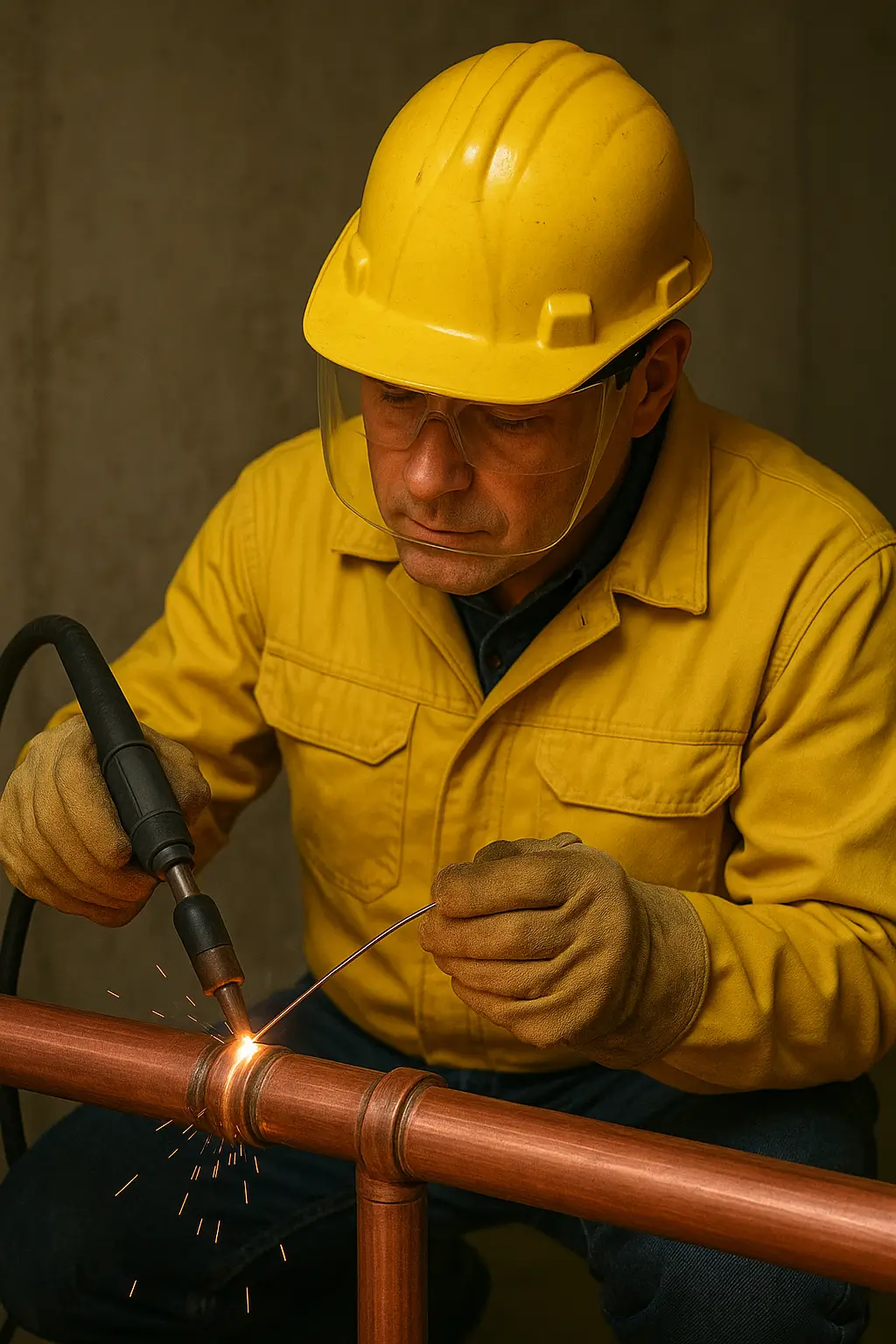
When I visited construction sites with clients, the difference was obvious. PPR joints take seconds. Copper joints need cleaning, heating, soldering, and cooling. That slows the whole team.
Installation Requirements
| Step | PPR | Copper |
|---|---|---|
| Tools | Heat fusion welder | Torch, solder, flux |
| Worker skill | Basic | Advanced |
| Safety risk | Low | Medium |
| Speed | Fast | Slow |
Reliability of Joints
Heat fusion makes the pipe and joint become one solid piece. Copper joints depend on perfect solder flow. Any mistake becomes a future leak.
Performance: PPR vs Copper Pipe
Many engineers now compare performance beyond just durability2.
PPR performs better in insulation, noise reduction, and chemical resistance, while copper performs better in extreme heat.
When I worked with hotels, schools, and apartment projects, performance meant more than strength. It included water flow, heat stability, noise, and water quality.
Performance Comparison
| Feature | PPR | Copper |
|---|---|---|
| Thermal insulation | Strong | Weak |
| Noise during flow | Quiet | Loud |
| Water taste | Neutral | May change in soft water |
| Chemical stability | Excellent | Depends on water chemistry |
| High-temperature capability | Good | Excellent |
Practical Impact
Copper can handle higher temperatures, but for normal domestic hot water systems, PPR’s insulation, quiet operation, and chemical stability often deliver better user experience.
Environmental Impact: PPR vs Copper Pipe
Sustainability is important for many developers today.
PPR has a lower environmental impact during production, transportation, and installation, while copper has higher energy use and carbon footprint due to metal extraction.

When I worked with clients who followed green building standards, they often reviewed the lifecycle of each material. Copper requires mining, refining, and high-temperature processing. PPR production uses less energy and creates fewer emissions.
Environmental Factors Affecting PPR vs Copper Pipe Systems
| Factor | PPR | Copper |
|---|---|---|
| CO₂ footprint | Low | High |
| Resource extraction | Light | Heavy (mining) |
| Recycling | Possible | Good |
| Transport energy | Low (lightweight) | High (heavy) |
Transportation Weight
PPR is much lighter. This reduces fuel use in shipping and makes handling easier on job sites. Lightweight materials lower the total environmental burden.
Conclusion
PPR is the better choice for most water systems because it avoids corrosion, reduces installation cost, and delivers stable long-term performance3.
Learn how different water chemistries affect plumbing materials, helping you make informed choices for your systems. ↩
Comparing durability helps you choose the right pipe for your needs, ensuring longevity and reliability. ↩
Understanding long-term performance ensures you select materials that will last and perform well over time. ↩