What Is UPVC? A Guide to Properties, Uses, and Applications
UPVC is common in water supply, drainage, irrigation, and industrial piping, but buyers often confuse it with flexible PVC. That confusion can lead to unsuitable pressure ratings, joint failures, or shorter service life. I find that understanding its composition, operating limits, and standards makes material selection much more reliable.
UPVC, or unplasticized polyvinyl chloride, is a rigid thermoplastic manufactured without added plasticizers.1 It offers good corrosion resistance, mechanical strength, low maintenance, and economical installation. Typical applications include building water mains, buried drainage pipes, siphonic rainwater systems, irrigation networks, and selected chemical-fluid pipelines.

However, the material name alone does not confirm suitability. I also evaluate pressure class, temperature, chemical exposure, joining method, dimensions, and supplier quality controls. These details determine whether a piping system performs reliably in its intended application.
What Are the Main Properties of UPVC?
Material selection becomes risky when buyers focus only on price or appearance. Two similar white pipes can have different formulations, dimensions, and pressure capabilities. I therefore review UPVC properties together with test reports and the applicable piping standard.
UPVC is rigid because its formulation does not include the plasticizers used to make flexible PVC products. It provides strong resistance to corrosion, many salts, acids, and alkalis.2 It also has a smooth internal surface, low weight, and useful mechanical strength, although temperature, sunlight, and chemical concentration can affect performance.
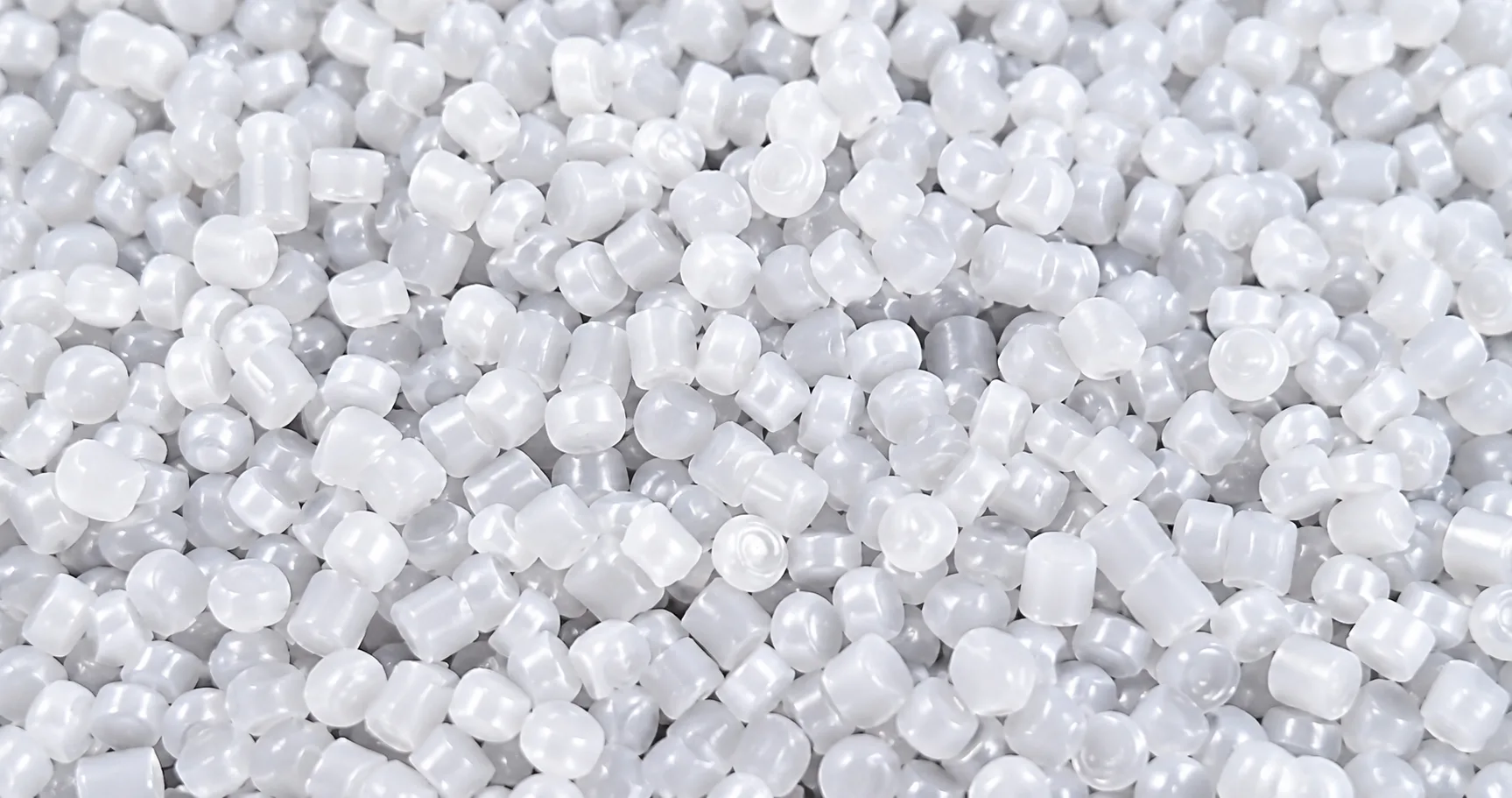
UPVC Versus Plasticized PVC
Both materials use polyvinyl chloride as their base polymer. Their formulations create different physical characteristics.
| Evaluation point | UPVC | Plasticized PVC |
|---|---|---|
| Plasticizers | No added plasticizers | Added for flexibility |
| Structure | Hard and rigid | Soft or flexible |
| Common products | Pressure pipe, fittings, valves, drainage pipe | Hoses, cable insulation, flexible sheets |
| Dimensional stability | Generally higher | Generally lower |
| Typical selection priority | Strength and system integrity | Flexibility and movement |
Manufacturers can still add stabilizers, pigments, lubricants, and processing aids to rigid PVC. For that reason, I do not treat “unplasticized” as proof that every formulation is identical or suitable for potable water. Buyers should request applicable migration, composition, or drinking-water compliance documents when regulations require them.
Temperature and Pressure Limits
Many standard systems operate within an approximate 0°C to 60°C range, but this is not a universal design limit. Pressure capacity normally decreases as fluid temperature rises.3 A pipe rated PN16 at a reference temperature may require derating under warmer service conditions.
I recommend checking:
- The manufacturer’s pressure-versus-temperature chart
- Nominal pressure class and safety factor
- Expected surge or water-hammer pressure
- Fluid concentration and exposure duration
- Joint type, including solvent cement or threaded connections
- Outdoor exposure and UV stabilization
UPVC can resist weathering better than many flexible PVC formulations, but prolonged ultraviolet exposure may still cause discoloration or surface deterioration4. I ask suppliers for outdoor-use guidance rather than assuming that every product has the same UV resistance.
I once reviewed two visually similar fittings whose dimensional tolerances differed enough to affect socket engagement. That experience reinforced my view that specifications and sample testing matter more than appearance.
Where Is UPVC Used, and How Should Buyers Evaluate It?
A technically suitable material can still fail if its pressure class, dimensions, or connections do not match the project. I assess the complete system rather than choosing isolated pipes, valves, and fittings from unrelated specifications.
UPVC is widely used in cold-water distribution, buried sewage and drainage lines, siphonic roof drainage, agricultural irrigation, municipal water networks, and compatible chemical handling. Buyers should match the product standard, pressure rating, diameter, joining system, and chemical resistance to actual operating conditions before purchasing.
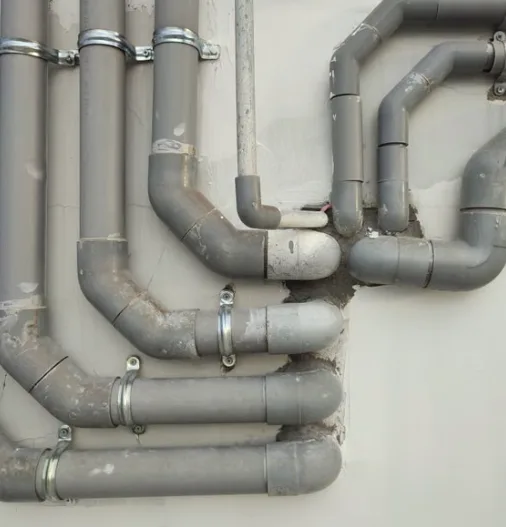
Common Application Areas
High-rise water mains: Rigid piping can provide corrosion resistance and low installation weight. However, engineers must calculate static head, pump pressure, surge pressure, pipe support, and local fire or building-code requirements.
Buried drainage: The material does not rust and has a smooth bore that can reduce deposits.5 Buyers should evaluate ring stiffness, soil loading, burial depth, bedding, impact resistance, and joint sealing.
Siphonic rainwater systems: These systems can operate under negative pressure and high flow velocity. I recommend using purpose-designed components and obtaining review from a qualified drainage engineer.
Irrigation and water treatment: UPVC valves and fittings are common where buyers need economical corrosion resistance. Designers still need to confirm fertilizer, disinfectant, and treatment-chemical compatibility.
A Practical Procurement Checklist
I use the following checks when comparing manufacturers:
- Confirm the standard. Verify whether products follow DIN, ANSI, BS, JIS, or another specified system. Parts from different systems may not connect correctly.6
- Review dimensions and tolerances. Check wall thickness, socket depth, thread form, flange drilling, and valve end connections.
- Request test evidence. Ask for pressure-test procedures, batch records, raw-material controls, and relevant inspection reports.
- Verify documents. Treat ISO 9001, CE, REACH, SGS, or BV documents as items to authenticate. Their scope, issuing body, product coverage, and validity dates matter.
- Evaluate production consistency. Review sample quality, traceability, packaging, capacity, lead time, and corrective-action procedures.
- Test project samples. Use qualified professionals or laboratories when pressure, potable-water, or chemical-service requirements are critical.
In our manufacturing context, we state that we use 100% virgin material and conduct 100% pressure testing on applicable valves. We also support international standards and OEM/ODM services. I encourage buyers to verify these controls through technical files, samples, inspections, or factory audits before approving a large order.
Frequently Asked Questions
Is UPVC the same as PVC?
UPVC is a type of PVC manufactured without added plasticizers. In trade usage, “PVC” may refer broadly to the polymer family or specifically to flexible PVC. I recommend confirming whether a specification requires rigid UPVC or a plasticized product.
Is UPVC suitable for hot water?
I generally do not select standard UPVC for hot-water distribution. Its pressure capacity decreases as temperature rises, and many systems specify an upper operating range near 60°C. CPVC, PPR, or another material may be more appropriate after professional evaluation.
Can UPVC carry drinking water?
Approved products can be used for potable-water systems, but the material name is not enough. I check local regulations, migration-test reports, approved solvent cement, product certification, and installation requirements.
How long does UPVC pipe last?
Service life depends on pressure, temperature, chemical exposure, sunlight, installation quality, and operating cycles. I avoid relying on a single lifespan claim without reviewing the relevant design standard and manufacturer’s technical data.
Conclusion
UPVC is a rigid, corrosion-resistant, and economical material for many cold-water, drainage, irrigation, and compatible chemical-service applications. I recommend comparing standards, pressure ratings, temperature limits, formulations, test records, and supplier controls before ordering. For project-specific decisions, buyers should also consult a qualified engineer. Contact us to evaluate UPVC valves, pipes, and fittings for your required standard, application, and OEM specification.
"Poly(vinyl chloride) - PubChem - NIH", https://pubchem.ncbi.nlm.nih.gov/compound/Polyvinyl%20chloride. Encyclopedic accounts of polyvinyl chloride distinguish rigid, unplasticized PVC from flexible PVC formulations made with added plasticizers. Evidence role: definition; source type: encyclopedia. Supports: An authoritative polymer reference should confirm that PVC without added plasticizers remains comparatively rigid and is commonly designated PVC-U or UPVC.. ↩
"Chemical Resistance and Chemical Applications for CPVC ...", https://www.nrc.gov/docs/ML1820/ML18207A604.pdf. ISO/TR 10358 chemical-resistance classifications document compatibility between PVC-U and many salts, acids, and alkalis under defined concentration and temperature conditions. Evidence role: general_support; source type: institution. Supports: A standards-based chemical-resistance table should show that PVC-U is rated resistant to numerous aqueous salts, acids, and alkalis under specified conditions.. Scope note: Such classifications do not establish compatibility for every concentration, temperature, joint material, or proprietary formulation. ↩
"PACE - Pipeline Analysis & Calculation Environment", http://ppipace.com/assumptions. PVC pressure-pipe design guidance applies temperature-dependent derating factors because increasing temperature reduces the material's allowable long-term hydrostatic stress. Evidence role: mechanism; source type: institution. Supports: A water-pipe design manual or standard should show temperature-dependent reduction factors for allowable PVC working pressure.. Scope note: The applicable factor depends on the governing standard, reference temperature, pipe class, and expected service duration. ↩
"Surface Chalking upon Weathering of Dark-Colored PVC ...", https://pmc.ncbi.nlm.nih.gov/articles/PMC11053820/. Weathering studies of rigid PVC report that sustained ultraviolet exposure can produce color change and surface degradation through photochemical oxidation of the polymer and its additives. Evidence role: mechanism; source type: paper. Supports: Weathering research should document photochemical changes, discoloration, or surface-property loss in rigid PVC exposed to ultraviolet radiation.. Scope note: Accelerated-weathering results do not translate directly into a universal outdoor lifetime because formulation, pigmentation, climate, and shielding affect degradation rates. ↩
""Hydraulic Characteristics of PVC Pipe in Sanitary Sewers (A ...", https://digitalcommons.usu.edu/water_rep/598/. Hydraulic studies generally report low initial roughness for PVC pipe, a surface characteristic associated with lower friction and potentially less attachment of some deposits than on rougher pipe materials. Evidence role: mechanism; source type: paper. Supports: Comparative pipe research should establish the low initial roughness of PVC surfaces and explain how surface condition influences hydraulic deposition.. Scope note: Low roughness does not prevent sediment, mineral scale, or biofilm formation, which also depends on water chemistry, velocity, temperature, and operating history. ↩
"PVC and CPVC Pipes Schedule 40 & 80", https://www.engineeringtoolbox.com/pvc-cpvc-pipes-dimensions-d_795.html. ISO, ASTM, DIN, and related piping standards prescribe particular diameter series, wall dimensions, sockets, threads, or flange patterns, so conformity to different systems does not by itself ensure component interchangeability. Evidence role: general_support; source type: institution. Supports: Comparing recognized standards should show that they prescribe distinct dimensional series and connection geometries.. Scope note: Some sizes or interfaces may coincide or be joined with purpose-designed adapters; incompatibility must be assessed for the specific standards and components. ↩